
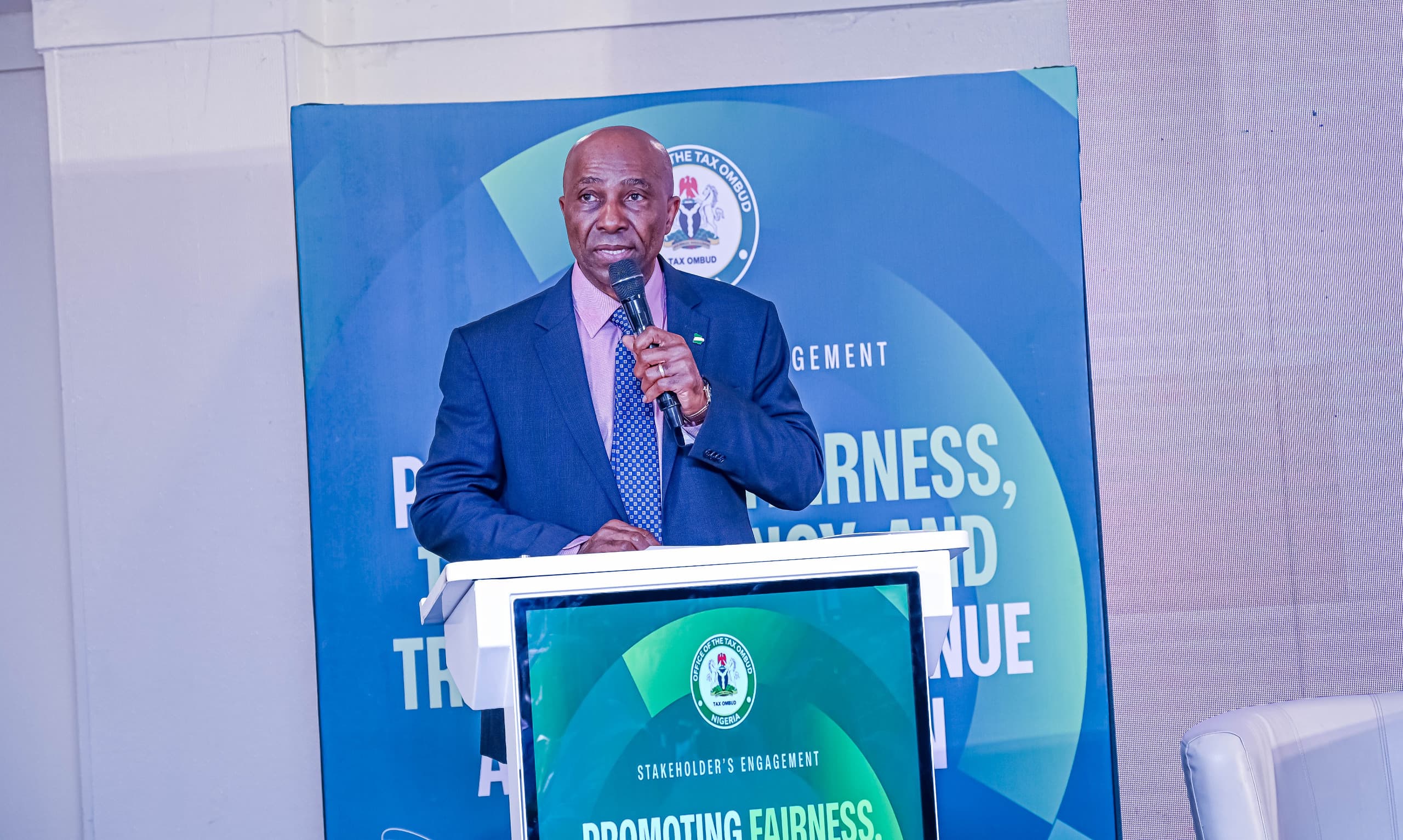
Key stakeholders in Nigeria’s tax and revenue ecosystem have backed the Office of the Tax Ombud’s efforts to promote fairness, transparency and accountability in tax administration and deepen taxpayers’ trust in the system.
The stakeholders made the call at a stakeholder engagement forum organised by the Office of the Tax Ombud, themed “Promoting Fairness, Transparency, and Trust in Tax and Revenue Administration in Nigeria.”
In a statement signed by Chukwudi Achife, Chief Press Secretary to the Tax Ombud, the forum brought together government officials, private-sector leaders, civil society organisations and media representatives to discuss measures to strengthen taxpayer confidence and build a more responsive and trusted tax system.
Read Also: Garo Urges NIPSS SEC 48 Participants to Explore Kano’s Economic Potential
Speaking at the event, the Tax Ombud and Chief Executive, Dr John C. Nwabueze, said tax administration should not be focused solely on revenue collection but must also ensure that taxpayers understand their obligations and are treated fairly.
“Tax administration is not simply about collecting revenue; it is about building a system where taxpayers understand their obligations, feel fairly treated, and trust the institutions responsible,” Nwabueze said.
He said the Office was committed to bridging gaps between taxpayers and tax authorities, protecting taxpayers’ rights and ensuring that the power to collect revenue was matched with fairness and accountability.
Nwabueze noted that Nigeria was the third African country to adopt the tax ombud mechanism, describing the development as an important step towards aligning the country’s tax administration with global best practices and the Renewed Hope Agenda of President Bola Ahmed Tinubu.
According to him, the Office provides services to individuals, businesses, small and medium-sized enterprises, tax practitioners and tax authorities, while plans are underway to expand its physical presence to all states and eventually local government areas across the country.
He explained that the Office handles operational, procedural and administrative complaints, while judicial matters and disputes over tax assessments fall within the jurisdiction of the Tax Appeal Tribunal.
Read Also: Police Arrest Two House Trespass Suspects, Recover Stolen Items in Damaturu
Nwabueze added that complaints are expected to be resolved within 14 days, with a possible seven-day extension where necessary, while unresolved matters could be escalated to the National Assembly in accordance with the law.
He assured taxpayers that the services of the Office are impartial, accessible and free, adding that the institution was committed to timely and professional mediation.
The Tax Ombud also announced plans to launch a Taxpayer Bill of Rights and Obligations Charter, as well as expand its regional presence to ensure taxpayers across Nigeria have access to effective redress mechanisms.
Representing the Minister of Finance and Coordinating Minister of the Economy, Taiwo Oyedele, Mr Olufemi Olarinde described the Tax Ombud as an independent institution established to address taxpayer grievances, promote systemic reforms and serve as a bridge between taxpayers and revenue authorities.
He commended the Office for its commitment to collaboration, digital innovation and the promotion of accountability, fairness and trust in Nigeria’s tax administration.
Representing the Corporate Affairs Commission, Mr Emmanuel Sunday Inyang, Director of Finance and Accounts, said a sustainable tax system depended on taxpayers understanding their obligations and being treated fairly.
He stressed the importance of transparency, efficient business registration systems and stronger inter-agency collaboration in strengthening tax administration and fostering trust between taxpayers and government.
The representative of the FCT Internal Revenue Service, Mr Hassan Usman, also emphasised the importance of transparency and accessible services in building confidence in the tax system.
Similarly, Dr Olufemi Ayinla Nurudeen Babalola, Director of Finance and Accounts at the Nigeria Export Processing Zones Authority, highlighted ongoing efforts to formalise tax processes and acknowledged the role of the Tax Ombud in dispute resolution and protecting the rights of investors and operators in free zones.
The Director-General of the Nigerian Shippers’ Council, Ms Vivian Chimizia Azubuike, called for greater fairness and transparency in tax policies affecting the maritime sector, particularly small and medium-sized enterprises.
She also advocated greater stakeholder consultation before the issuance of new tax circulars, stressing that fairness and swift dispute resolution should become the norm.
The engagement featured a panel discussion involving representatives of the Manufacturers Association of Nigeria, Nigerian Association of Chambers of Commerce, Industry, Mines and Agriculture, fintech associations and the ICT team of the Office of the Tax Ombud.
The discussions focused on practical measures to strengthen taxpayer confidence, improve dispute resolution, promote digital innovation and foster greater collaboration among tax authorities, businesses and other stakeholders.