
From Umar Dankano, Yola
A total of 156 teachers, adolescents, tailors, Village Health Promoters (VHPs), Local Government WASH officials, and state stakeholders have been trained on Menstrual Health and Hygiene Management (MHHM) across schools and communities in Adamawa State.
The training, which utilized the improved Menstrual Health and Hygiene Management Manual for schools and communities, was organized through a collaboration between the Adamawa State Government and UNICEF, with funding support from the Government of the Netherlands under the Accelerating Sanitation and Water for All (ASWA III) programme.
The initiative aims to improve awareness and promote healthy menstrual hygiene practices among adolescents, particularly girls, while addressing myths and misconceptions surrounding menstruation.
Beneficiaries of the training, including teachers and pupils, said the programme had enhanced their understanding of menstrual hygiene and equipped them with practical knowledge on managing menstruation, especially during school hours.
A teacher at Kiri Pilot Primary School in Shelleng Local Government Area, Mrs. Janet Jibril, described the training as transformative, noting that it had provided participants with professional approaches to educating pupils on menstrual health.
Read Also: Adamawa Expands Community-Based Healthcare Training, Reaches Over 1300 Health Workers
According to her, the awareness campaign has contributed significantly to reducing absenteeism among adolescent girls in the school, as many now feel more confident attending classes during their menstrual periods.
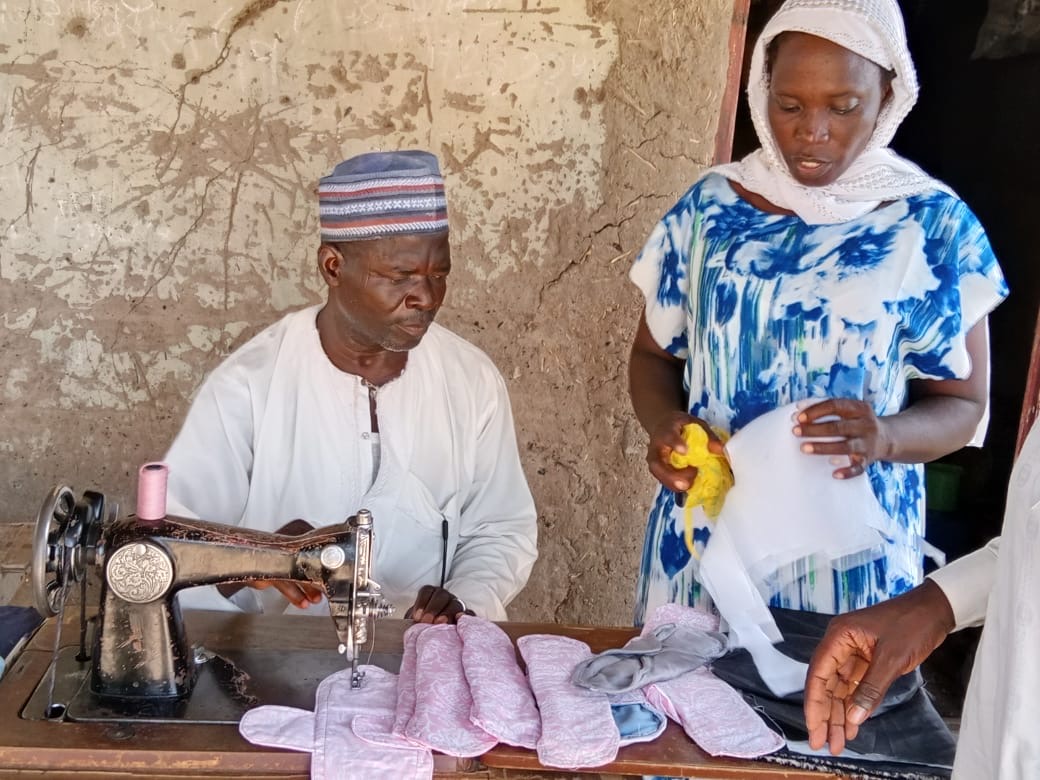
Another teacher, Usman Hassan, said pupils were taught how to produce reusable sanitary pads using locally available materials. He added that the school now maintains a stock of the locally made pads to support girls whenever the need arises.
One of the participants, Musa Halilu, a tailor, said the programme had expanded his business opportunities. He explained that the school engaged him to sew reusable sanitary pads, adding that demand for the products has increased among women in surrounding communities.
Speaking on the impact of the intervention, the General Manager of RUWASSA, Emmanuel Essey, and UNICEF WASH Officer, Nanbam Michael, expressed optimism that sustained awareness activities in Ganye and Shelleng Local Government Areas had improved confidence, health, and dignity among residents.
They noted that community attitudes toward menstrual health, particularly among men, had changed positively due to increased awareness. The experts urged participants to share the knowledge gained with others, emphasizing that the programme remains a key partnership between the Adamawa State Government, UNICEF, and the Netherlands-funded ASWA III initiative.