
By Mustapha Salisu
The Katsina State Community Development Programme (CDP) has placed community-level committees at the centre of its effort to shift governance from a top-down approach to one driven by residents at the grassroots.
The programme, introduced by the Katsina State Government on November 21, 2024, uses the state’s 361 political wards as communities, with each ward operating a Community-Level Committee responsible for coordinating government interventions and identifying local priorities.
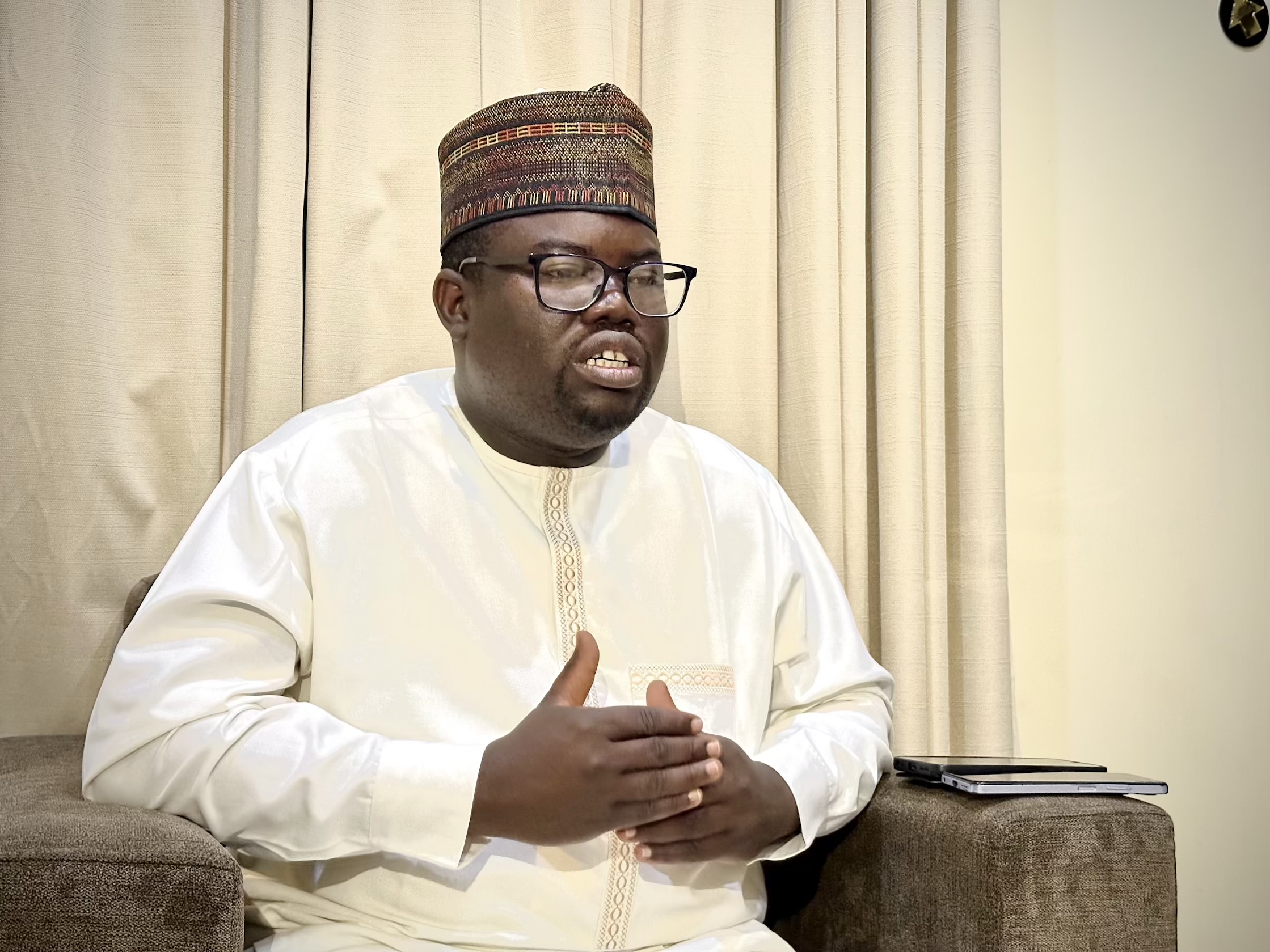
State Coordinator of the CDP, Dr. Kamaludeen Kabir, during an interactive session with journalists on Tuesday in Kano, said the Community-Level Committee is the “main engine room” of the programme because it is where the bulk of the work takes place.
According to him, the structure was created to give residents a direct role in determining what happens in their communities.
“People at the grassroots can have their input in governance. Specifically, people can now decide what happens within their communities,” Kabir said.
The CDP operates through three major committees: the State Steering Committee, chaired by Governor of Katsina State; the Joint Planning Committee, which handles issues requiring coordination between the state and local governments; and the Community-Level Committee, which operates directly at the grassroots.
While the first two provide strategic and planning functions, the Community-Level Committee is responsible for translating the programme’s objectives into action within the 361 wards.
Kabir explained that the decision to adopt political wards as communities was made because using polling units would have been difficult to manage, given that Katsina State has more than 6,652 polling units.
Each of the 361 Community-Level Committees comprises local government personnel and representatives of key groups within the community.
The membership includes the councillor, Maigari or village head, two clerics, the head of primary healthcare, education and extension personnel, a headmaster, three elders, as well as representatives of women, youths, persons with disabilities and traders’ unions.
Read Also: Katsina communities groans deplorable state of road
Three trained local government staff—Community Development Officers, Community Support Officers and Community Learning Officers—also form part of the structure.
Kabir said the government trained staff within Grade Levels 7 to 12 and conducted examinations before deploying successful candidates to the different wards.
He said the arrangement has also provided specific responsibilities for local government workers who previously had limited schedules.
At the community level, the committees are expected to identify problems, coordinate interventions and ensure that public facilities receive attention before they deteriorate.
Kabir said the state government initially provided N10 million to each ward for minor repairs and maintenance of public facilities.
The funds, he explained, can be used to repair non-functional boreholes and solar systems, renovate dilapidated primary schools, and address problems involving culverts and drainage.
The approach, he said, is intended to shift attention from only constructing new projects to maintaining existing public infrastructure.
Beyond infrastructure, the Community-Level Committees are also involved in identifying beneficiaries of government interventions.
Rather than having beneficiaries determined solely by officials, communities are expected to hold town hall meetings and identify people who need particular forms of assistance.
“These people can identify a farmer who deserves fertilizer or irrigation support, a poor and vulnerable person who needs food, or someone in business who requires support for their business activities,” Kabir said.
He added that the community submits the identified needs, after which the relevant government intervention is delivered.
Read Also: Bandits Raid Katsina Shari’ah Court, Judge Flees Through Window
The programme has also established mechanisms intended to ensure accountability over the ward-level funds.
Each ward is required to operate an account, with the village head, Community Development Officer and Community Learning Officer serving as signatories.
Kabir said any proposed expenditure must first be communicated to the Programme Delivery Office for approval.
After the expenditure, the committee is required to submit receipts and other evidence of spending before it can access additional funds.
“Every payment that we approve must be retired to ensure transparency,” he said.
The state government has also increased funding for the programme.
Kabir said the CDP received N3.61 billion in the previous year, while funding was increased to N4 billion this year, with a provision of N5 billion for next year.
He said an additional N10 million allocation has also been approved for wards that exhaust their previous funds and demonstrate proper utilisation.
According to him, the programme has been used to facilitate several interventions, including the distribution of 4,000 hand-operated tillers, 4,000 solar-powered water pumps and 48,000 bags of fertilizer free of charge.
The state also sold more than 400,000 bags of fertilizer to farmers at a subsidised price of N20,000 per bag in 2026, with allocations varying across the Funtua, Katsina and Daura zones.
Other interventions cited by the coordinator include the distribution of 90,000 bags of grains to vulnerable people, support for more than 10,030 people engaged in nano and micro businesses, and the distribution of another 4,000 petrol-powered water pumps.
The programme has also distributed sprayers, liquid fertilizer, pesticides and herbicides to farmers.
Kabir said another 90,000 bags of grains were distributed recently, including 50kg bags of rice and 100kg bags of millet and sorghum.
He explained that even when an allocation is made to a ward, the Community-Level Committee is expected to take the intervention to different areas within the ward rather than independently deciding the beneficiaries.
Residents in those areas are asked to identify vulnerable people who should benefit.
“This is literally community-driven. If the people do not say they want to give you something, you will not have it, whoever you are,” he said.
The programme has also distributed 33,000 goats, with 90 goats allocated to each ward for women.
Read Also: Dandume Community Gets Six-Classroom School as Hon. Adamu Ladan Hands Over Project
Kabir said the community-based structure allows the programme to monitor outcomes more closely, including cases where beneficiaries report that goats have reproduced and they are ready to pass on the offspring.
He said the CDP’s community-based approach is also being applied to the formulation of the state budget.
According to him, the 2026 Katsina State budget was developed from priorities identified during town hall meetings held across the 361 communities.
He said the same approach was used in preparing the 2027 budget.
Kabir said the programme was inspired by the community-driven development approach associated with the World Bank, which allows communities to identify their needs and participate in determining how interventions should be delivered.
He said the model is also intended to improve inclusion, particularly in communities affected by security challenges.
According to him, security personnel have supported efforts to enable CDP teams to reach some areas and carry out activities such as repairing boreholes.
Kabir said the programme’s focus on direct community participation was designed to ensure that residents, including those in rural and underserved areas, can access government interventions without having to rely on political or personal connections.
He also cited recruitment into the civil service and schools as another area where the government is applying a needs-based approach.
He said teacher recruitment is being linked to vacancies in specific schools, allowing applicants to apply for positions based on identified staffing needs.
“If a primary school in a particular community does not have an English or Mathematics teacher, when you apply online, you will be required to select the local government and the particular school where there is a vacancy,” he said.