
By Mustapha Salisu
The Kano State Government has launched Evidence-Based Re-entry Guidelines to support married adolescents and adolescent mothers to return to school.
The initiative spearheaded by ACE Charity, is aimed at ensuring that marriage does not permanently end a girl’s education.
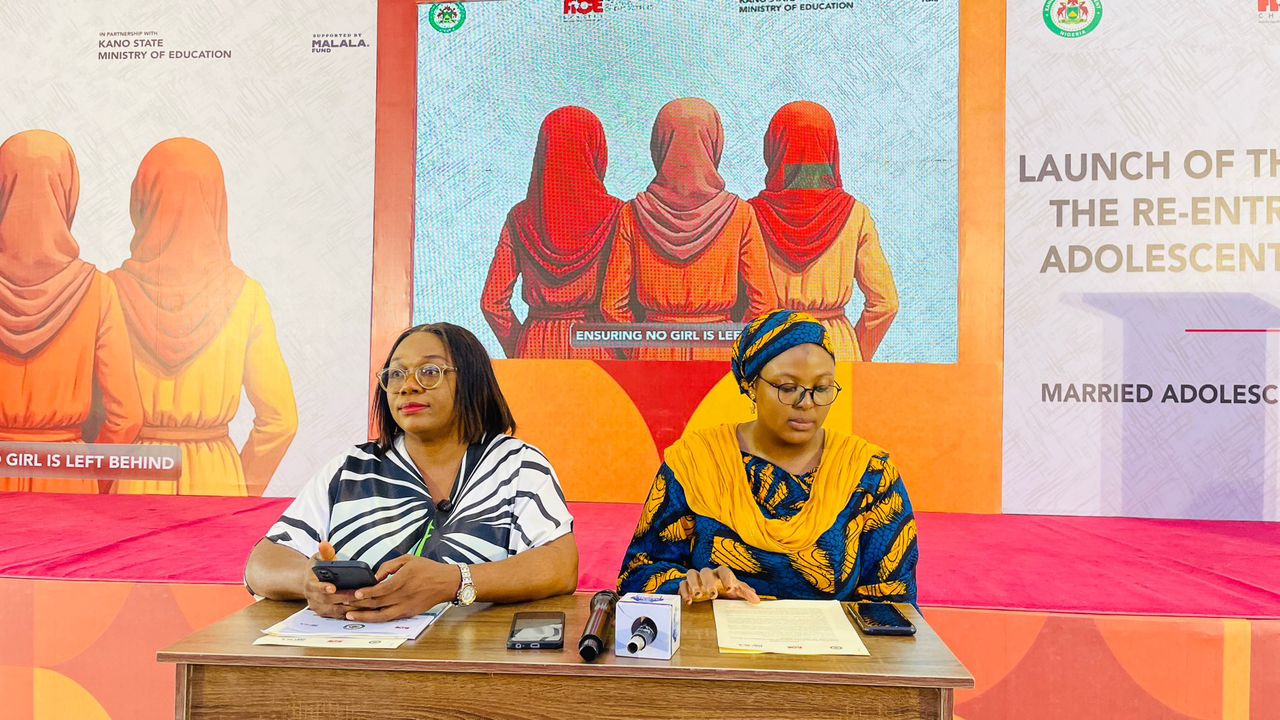
During a press briefing today in Kano, Mrs. Eno Simon, Head of Office, ACE Charity, and Ms. Rahina Opotu, Grants and Partnerships Officer, they said the guidelines were developed by the Kano State Ministry of Education with technical support from ACE Charity and funding from the Malala Fund.
They explained that the guidelines were informed by consultations with government agencies, development partners, traditional and religious leaders, and married adolescents across the state.
According to the officials, a study conducted by ACE Charity found that 99 per cent of married adolescents want to return to school, but are held back by financial hardship, childcare responsibilities, transport costs, domestic duties and stigma.
The research also found that many girls would require financial assistance, flexible learning opportunities and childcare support before they can successfully continue their education.
Read Also: Malaysia to create 2,596 new school classrooms by 2027 – CLOCWISE REPORTS
They added that the findings challenged common assumptions about community attitudes, as many traditional and religious leaders expressed support for married girls returning to school. Many husbands also indicated willingness to support their wives’ education if practical barriers are addressed.
The guidelines outline measures such as flexible learning pathways, strengthened learning centres, childcare and psychosocial support, facilitator training, community sensitisation and active participation of husbands, traditional and religious leaders.
They also assign responsibilities to government ministries, schools, community-based organisations, development partners, civil society groups and the media to ensure effective implementation.
The launch attracted government officials, development partners, education stakeholders, community and religious leaders, civil society organisations and married adolescents. Activities included goodwill messages, presentation of research findings, unveiling of the guidelines and a panel discussion on implementation.
The organisers urged development partners, schools, parents, communities and the media to support the implementation of the guidelines, saying success would be measured by the number of married adolescents and adolescent mothers who return to school and complete their education.