
By Mustapha Salisu
The Disability Project Initiative (DPI), a non-profit organisation formed and led by persons with disabilities, has launched a 12-month project aimed at empowering persons with disabilities to participate in climate change mitigation and adaptation efforts in Kano State.
The organisation’s Programmes Officer, Saifullahi Mukhtar Sadiq, disclosed this on Thursday at Bridge Connect’s office in Kano while speaking on the initiative tagged “Empowering Persons with Disabilities for Climate Change Mitigation and Adaptation in Kano State.”
Sadiq described the initiative as the first of its kind in Kano State, noting that DPI was established and is being led by persons with disabilities themselves.
He said unlike situations where persons with disabilities are merely invited to make other organisations’ activities inclusive, the DPI project provides an opportunity for persons with disabilities to take the lead while engaging able-bodied persons as participants.
According to him, persons with disabilities are disproportionately affected by climate change, depending on their specific conditions.
He cited persons with albinism as an example, noting concerns over the effects of solar radiation, while people with spinal cord injuries can face serious health challenges during periods of extreme heat.
Sadiq said the challenges faced by persons with disabilities in relation to climate change are often overlooked, prompting DPI to develop an initiative specifically addressing their experiences and needs.
He explained that the organisation sought funding for the project and successfully secured support, after which it commenced the 12-month programme with a baseline study.
Presenting and disseminating the findings of the baseline study, the research consultant, Dr. Auwal Enu Bello, said the overall objective was to generate evidence on the impact of climate change on persons with disabilities in Kano State and inform inclusive climate adaptation and policy development.
Read Also: Forum Trains PWDs on Disability-Inclusive Climate Action in Kano
Bello said the study specifically assessed climate-related hazards and vulnerabilities experienced by persons with disabilities, as well as the effects of climate change on their livelihoods, health, education, mobility and social participation.
He added that the study examined existing coping strategies adopted by persons with disabilities in response to climate change and identified systemic barriers limiting their access to climate information, early warning systems, disaster response mechanisms, social protection schemes and climate adaptation programmes.
The consultant further said the study sought to identify the support needs of persons with disabilities to strengthen their resilience and adaptive capacity against climate-related hazards and vulnerabilities in Kano State.
Bello said the findings would provide evidence that could support more inclusive approaches to climate adaptation and policy development, particularly in addressing the specific challenges faced by persons with disabilities in Kano State.
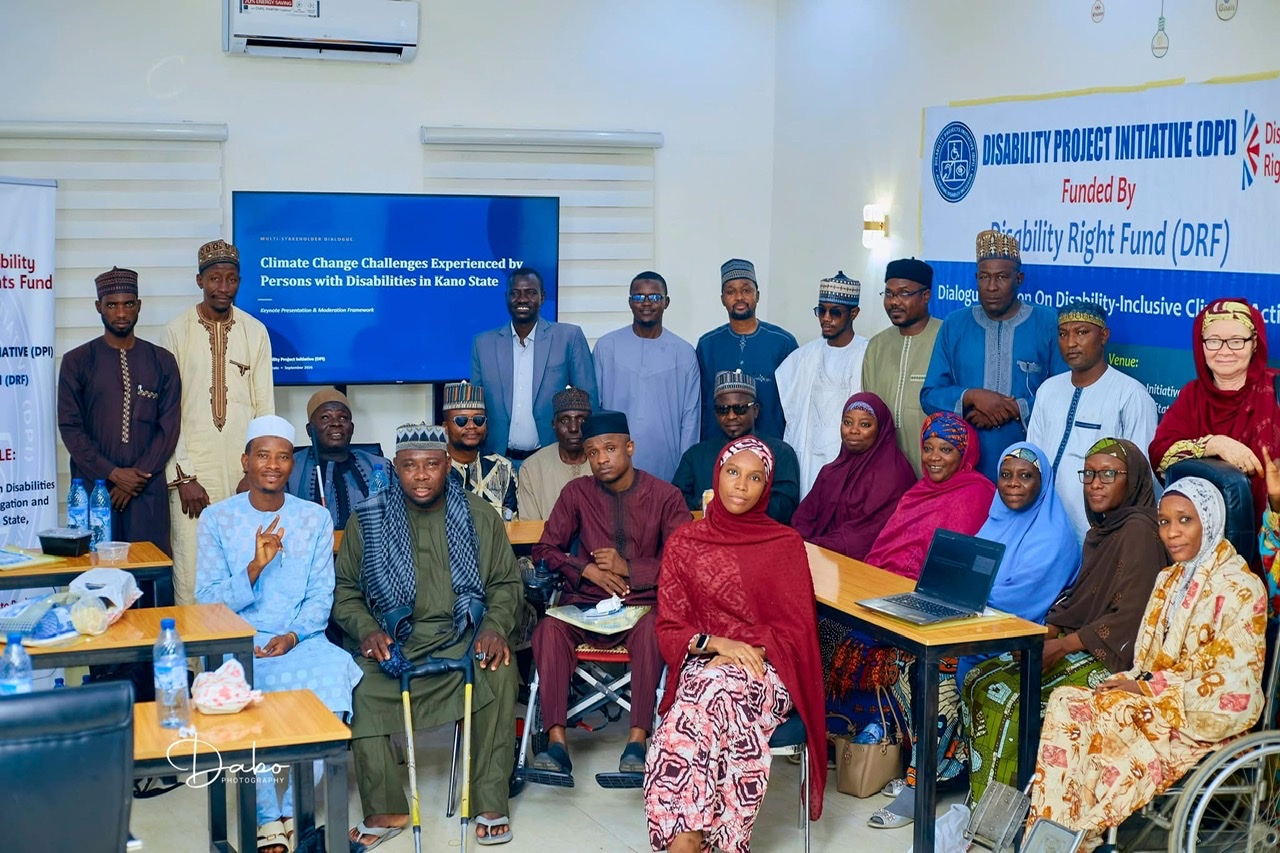
CLOCKWISE REPORTS gathered that, the programme also featured a multi-stakeholder dialogue titled “Climate Change Challenges Experienced by PWDs in Kano State,” moderated by Barrister Nura Ahmed Muhammad, where participants discussed the specific climate-related challenges confronting persons with disabilities and the barriers affecting their ability to respond effectively.
This was followed by another dialogue session titled “Solutions, Priority Actions and Recommendations for Disability-Inclusive Climate Action in Kano State,” also moderated by Barrister Nura Ahmed Muhammad, which focused on practical solutions, priority interventions and recommendations for strengthening disability-inclusive climate action in the state.
Highlights of the session also included goodwill messages from stakeholders drawn from academia, government agencies, civil society organisations (CSOs) and other relevant sectors, who emphasised the need for greater inclusion of persons with disabilities in climate change policies, programmes and adaptation efforts.