
By Mariya Shuaibu
More than 110 kilometres from Kano metropolis, Tsangaya Primary Health Centre (PHC) is the only primary healthcare facility serving residents of the community.
For people who need basic healthcare, the facility is often the first place to seek help.
Located in Albasu Local Government Area of Kano State, which shares a boundary with Jigawa State, Tsangaya serves a rural community where access to healthcare can depend heavily on what is available at the PHC.
But while government and development partners have intervened at the facility over the years, health workers say important resources needed to provide care are still missing.
In 2023, UNICEF, through its Water, Sanitation and Hygiene (WASH) programme, supported the construction of a sanitation facility at the health centre.
More recently, the Kano State IMPACT Project carried out renovation work at the facility. The intervention included painting and other minor improvements, as well as improvements to basic infrastructure.
The facility now has solar power and a water supply.
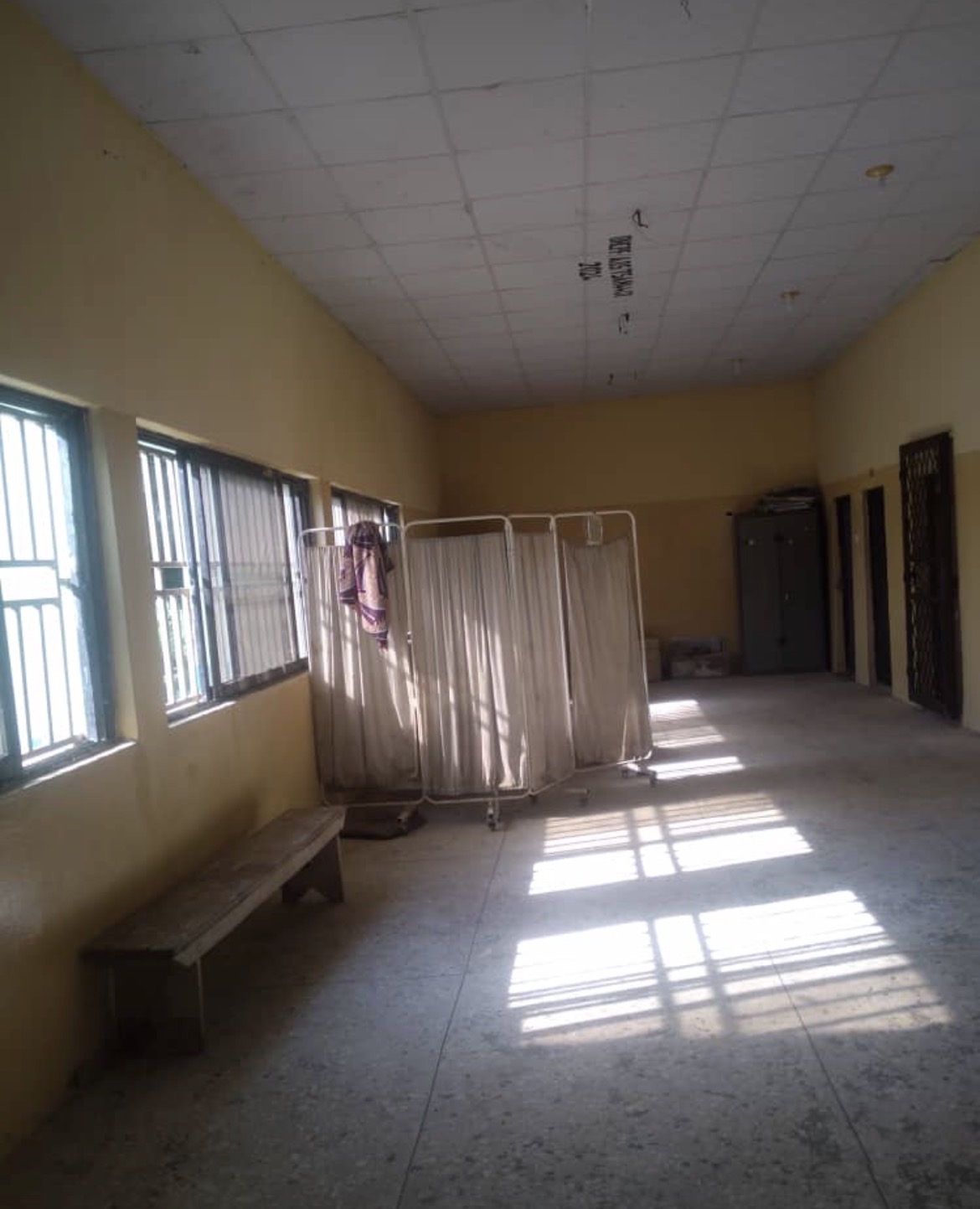
But inside the health centre, this reporter did not see a single bed when she visited the PHC.
There is also no doctor at the facility, while health workers say the number of other personnel is inadequate and essential medical equipment is also lacking.
The toilets are not hygienic and require further renovation. Another problem is the absence of a drainage system within the facility compound.
The health centre has a borehole, but water used around the facility has nowhere to drain. During the visit, water was seen lying on the ground within the compound, creating stagnant pools that could favour mosquito breeding.
For a community this far from Kano city, the gaps raise questions about how far physical renovation alone can improve access to healthcare.
The recent renovation has improved the physical appearance of the health centre.
The walls have been painted and some aspects of the facility have been improved under the Kano State IMPACT Project.
Kano State procurement records show that the IMPACT Project awarded a contract worth about ₦2.42 billion in May 2025 for the upgrading of 19 PHCs across Albasu, Garko, Kibiya, Sumaila and Takai LGAs. The contract was awarded to Nass Capital Limited.
The public procurement document does not individually name Tsangaya PHC among the 19 facilities. However, the intervention at Tsangaya was identified during this reporting as part of the IMPACT-supported work at the facility.
The intervention has provided improvements that health workers and residents can see but the physical condition of a PHC is only one part of its ability to provide healthcare.
At Tsangaya, the more persistent gaps are inside the facility.
When the only health centre has no doctor
Garba Ibrahim, a Community Health Extension Worker at Tsangaya PHC, said the facility does not have a doctor and does not have enough personnel and essential equipment to meet the needs of the community.
The shortage is particularly significant because Tsangaya is a rural community and the PHC is the main health facility available to residents.
For patients requiring services the centre cannot provide, the distance from the community to larger health facilities can become an additional barrier.
Mr Ibrahim also spoke about residents’ reluctance to use the facility, saying the limitations of the centre affect the confidence of some community members in the services available there.
What a functional PHC should have
According to the The National Primary Health Care Development Agency (NPHCDA), a functional Level 2 primary healthcare centre should have adequate human resources, essential drugs and basic equipment, reliable electricity and WASH facilities. Its requirements include four to six skilled birth attendants where staff accommodation is available, or at least six where there is no accommodation. A functional Level 2 facility is also expected to have separate male and female toilets, inpatient wards, a delivery or labour ward, laboratory services, a pharmacy or dispensary, a borehole with an overhead tank and reliable power supply, including solar backup.
The NPHCDA’s Ward Minimum Health Care Package also outlines a broader workforce for ward-level PHCs, including a community health officer, public health nurse, three community health extension workers, six junior community health extension workers and four nurse/midwives, with a medical assistant listed as optional. A recent PHC Operational Capability Report by Orodata Science and Civic Tech found that only three per cent of 1,480 PHCs assessed across 16 states met the national minimum staffing requirement. The assessment, conducted between October 2023 and June 2025, examined staffing alongside infrastructure, equipment, electricity, water supply and accessibility. Its findings provide a wider context for Tsangaya, where health workers report inadequate personnel, no doctor, a shortage of beds and gaps in essential equipment.
Water without drainage
The provision of water has improved one basic need at the health centre, but it has also exposed another infrastructure gap.
The facility has a borehole, but there is no drainage channel to carry used water away from the compound.
During the visit, water was observed collecting on the ground around the facility.
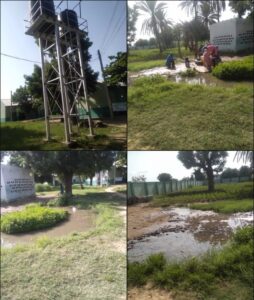 Photo grid of how water stays stagnants in the facility compound (CREDIT: Mariya Shuaibu).
The official said without a drainage system, water discharged during routine activities remains on the surface instead of being channelled away.
The stagnant water creates an environmental concern, particularly in a healthcare facility where hygiene and sanitation are important.
The problem is striking because the facility has already benefited from WASH-related intervention.
The earlier UNICEF-supported sanitation intervention and the more recent IMPACT renovation show that the centre has received different forms of external support. Yet the absence of drainage and the condition of the toilets indicate that sanitation needs have not been completely addressed.
The missing beds and equipment
The absence of beds was among the most visible gaps during the visit.
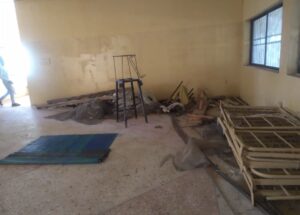 Broken beds packed in a room at the facility (PHOTO CREDIT: Mariya Shuaibu)
Although the facility has been renovated, this reporter did not see a single bed inside the wards in the facility, only broken beds packed in the building.
Health workers also said essential medical equipment is still lacking.
This means the improvements to the physical structure have not been matched by everything required to make the centre capable of providing a broader range of services.
The Kano State Primary Healthcare Management Board said in July 2026 that it had procured and distributed basic tracer equipment to 484 PHCs across the state as part of efforts to meet Minimum Service Package requirements.
The equipment was handed over to LGA PHC coordinators for onward distribution to facilities.
For Tsangaya, however, an important accountability question remains: what equipment was allocated to the facility, when was it delivered, and what equipment is still missing?
Those questions are important because the centre continues to report shortages despite the wider state-level equipment intervention.
Kano’s health budget
Kano’s 2026 budget provides a wider picture of the resources available to the state’s primary healthcare system.
The Primary Health Care Management Board has an approved 2026 budget of about ₦14.92 billion.
By the end of June, the board had spent about ₦5.65 billion, representing 37.8 per cent of its annual budget.
Of the ₦12.90 billion capital allocation, about ₦4.99 billion, or 38.7 per cent, had been spent by June.
The state also budgeted about ₦6.02 billion for the rehabilitation and repair of hospitals and health centres, with about ₦2.41 billion spent by June.
Another ₦2.43 billion was allocated for implementation of the Minimum Service Package investment plan, of which about ₦862.6 million had been spent by June.
The 2026 budget performance report also lists a ₦100 million project for upgrading Fanda Primary Health Centre in Albasu LGA.
Tsangaya PHC, however, does not appear as a separately named project in the PHC capital-project list reviewed for the 2026 budget performance report.
This does not establish that no public money was spent on Tsangaya. Rather, it means the specific funding source for the intervention observed at Tsangaya is not identifiable from the named PHC projects in that document.
That makes the IMPACT intervention and its scope particularly relevant to the accountability questions surrounding the facility.
The wider staffing problem
The staffing challenge at Tsangaya is not isolated.
A 2026 assessment by Orodata Science and Civic Tech examined 1,480 PHCs across 16 states and found that 97 per cent did not meet national minimum staffing requirements.
Only three per cent of the assessed facilities met the staffing standard.
About 75 per cent of the facilities assessed were in rural communities, where PHCs often serve as the first and sometimes only formal source of healthcare.
The assessment also found that staffing shortages often occurred alongside problems with infrastructure, electricity, water and medical equipment.
Kano was among the states identified as having particularly serious gaps in safe water, reliable electricity and essential newborn-care equipment.
The findings provide a broader context for what is happening at Tsangaya, although the national assessment did not measure Tsangaya PHC itself.
A building is not enough
Dr Austine Ajogwu, Secretary-General of the Association of Public Health Physicians of Nigeria, has said many government-upgraded PHCs remain unable to function effectively when renovations are not accompanied by adequate equipment and trained health workers.
His position is consistent with the situation at Tsangaya, where improvements to the building have not resolved shortages of personnel, beds and essential equipment.
For a primary healthcare centre, the value of renovation ultimately depends on whether the facility can provide the services it is intended to deliver.
At Tsangaya, the painted walls, solar power and water supply represent visible improvements.
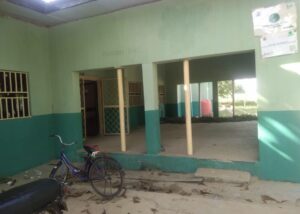
Front view of Tsangaya PHC. (PHOTO CREDIT: Mariya Shuaibu)
But the lack of a doctor, inadequate personnel, absence of beds, shortages of essential equipment, poor toilets and lack of drainage show that significant gaps remain.
The situation at Tsangaya also raises a broader question about how primary healthcare investments are measured.
A facility may receive a renovation and look substantially different from what it looked like before the intervention but patients experience healthcare through the services available when they arrive.
If there are no beds for patients, inadequate personnel to attend to them, no doctor, limited equipment and unresolved sanitation problems, the benefits of physical renovation can be limited.
For Tsangaya residents, the question is therefore not simply whether their health centre has been renovated. It is whether the investment has made the facility more capable of providing the healthcare they need.
For a community more than 110 kilometres from Kano metropolis, where the PHC is the main nearby source of formal healthcare, that distinction matters.
The difference is between having a renovated health centre and having a health centre that residents can depend on.
What we need is essential equipment, beds, a doctor and more personnel not just painting and other small renovations,” Mr Ibrahim, the health worker said.
This story was produced for the Follow the Money Investigative Programme and supported by the Africa Data Hub and Orodata Science.