
By Aisha Habib Maigiwa
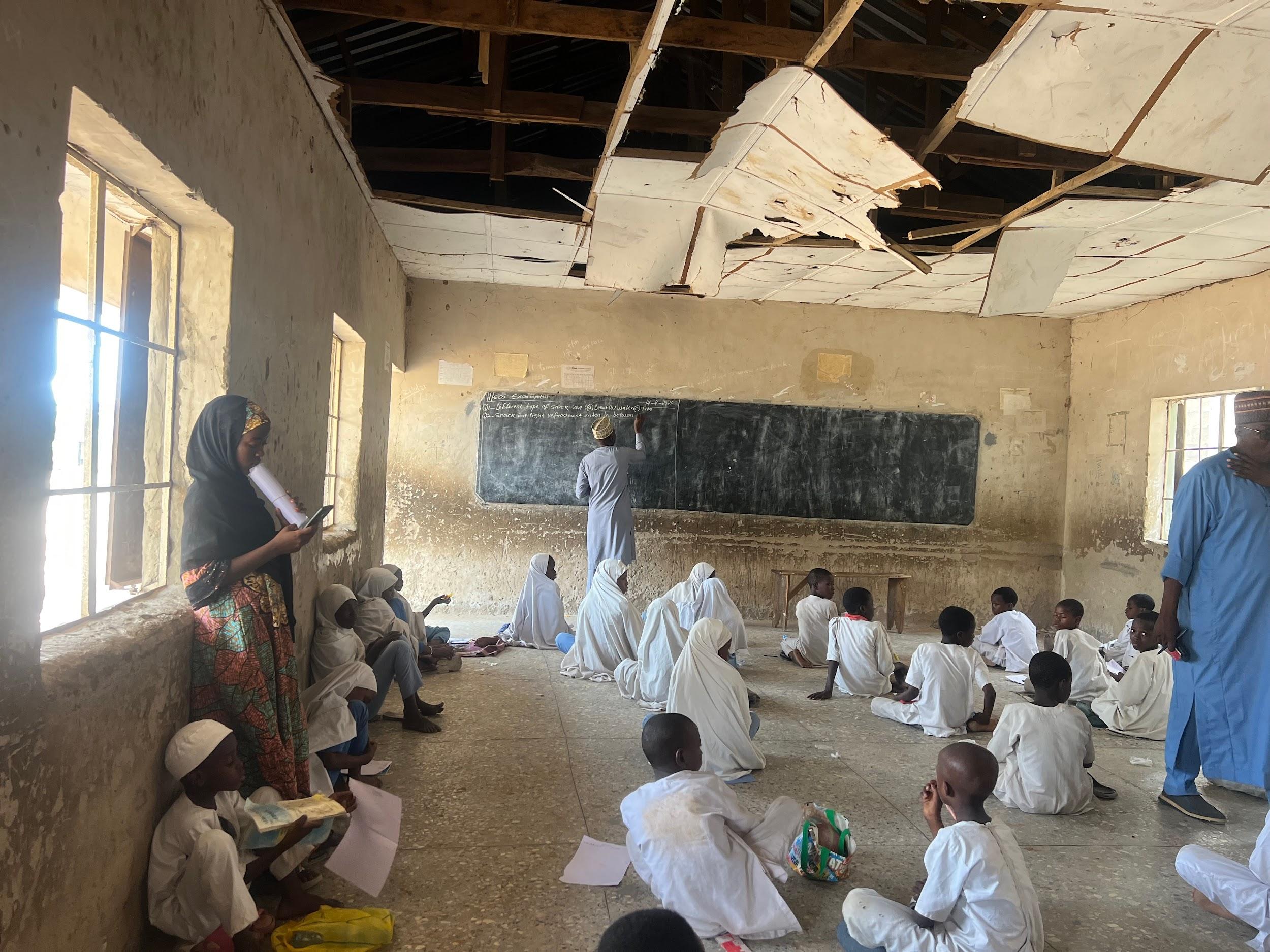
Every morning, pupils of Jaoji Special Primary School in Kumbotso Local Government Area of Kano State arrive with hopes of learning and building a brighter future. But for many of them, the journey of education begins on a difficult note – sitting on bare floors, enduring harsh weather, and studying in classrooms that have fallen into disrepair.
For 12-year-old Halima Basiru, a Primary Six pupil, learning has become an exercise in endurance. As she copied notes from the blackboard, she repeatedly wiped sweat from her face with the edge of her hijab while adjusting herself on the rough classroom floor.
“I walk past some schools on my way here every day. I feel sad when I see children sitting on chairs and using tables. Some even have clean whiteboards. I wish we had the same things here too,” she said quietly.
Read Also: Breaking the Cycle: Why Ending Early Marriage is Key to Girl-Child Education
Established in 1992, Jaoji Special Primary School has educated generations of children from Jaoji and surrounding communities. Today, the school accommodates about 1,500 pupils across 14 classrooms and four offices, many of which are visibly deteriorating.
Despite the difficult conditions, teachers continue to show commitment to the pupils, while community members express hope that the school will one day receive the support needed to restore a conducive learning environment.
The school’s headmaster, Auwal Adamu, described the daily reality faced by both pupils and teachers.
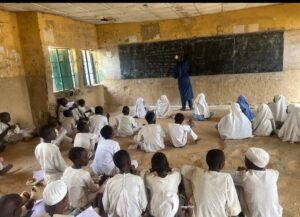
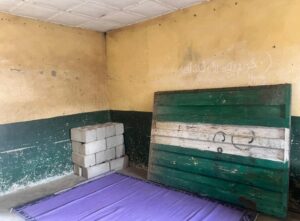
“There are no chairs in the classrooms. The children come with prayer mats, empty rice sacks, or cement bags to sit on during lessons. Some of the female pupils use wrappers or scarves to sit on. The classrooms have no windows, and the children suffer a lot during the cold season,” he explained.
Teachers say overcrowded classrooms and inadequate facilities have made learning increasingly challenging, especially during periods of extreme weather.
Read Also: FG Establishes 119 Learning Centres For Almajiri Education
A Social Studies and Civic Education teacher, Kabiru Umar Hassan, noted that many pupils already face economic hardship at home before arriving at school.
“Most of these children come from poor homes. They leave their houses for school on empty stomachs and still find no comfort in the classroom because the conditions are just as difficult. It becomes almost impossible for them to concentrate during lessons,” he said.
He added that lack of instructional materials also limits practical teaching.
“Sometimes lessons require demonstrations, and I buy some materials with my own money when I can afford them,” he added.
Beyond learning challenges, the school community also struggles with environmental and sanitation concerns. Teachers explained that the absence of adequate security has exposed the school to vandalism and misuse of classrooms after school hours.
Kabiru Umar recalled that some female staff members had to relocate from their office because of environmental pollution around the building.
Read Also: FG Unveils N50m Equity Free Grant For Tertiary Students
“The security guards we had were very old and eventually retired. Since then, theft has become common. Children even come into the school premises to defecate in classrooms and around the compound,” he said.
Research conducted in 2024 by Helen Ross of the University of Melbourne and Samuel Greene of Monash University highlighted how poor and overcrowded learning environments can negatively affect students’ emotional well-being, confidence, and academic performance.
For many pupils at Jaoji Special Primary School, however, the difficult conditions have not erased their dreams.
Hamisu Musa, a Primary Four pupil, said he still hopes to become a successful businessman someday.
“I want to become a well-educated businessman like my brothers. I always sit in front during lessons, but my trousers get torn because I sit on the bare floor. I dream of the day we will have chairs and tables,” he said.
Teachers at the school also believe the pupils deserve a better environment to nurture their potential.
A Primary Three teacher, Auwalu Salisu, said educators in the school remain dedicated despite the challenges.
Read Also: Nigeria has saved $20bn from subsidy removal – FG
“My colleagues and I are capable teachers, but the learning environment makes our work difficult. We still try our best because these children deserve quality education,” he said.
He added that overcrowded classrooms become unbearable during the hot season, while rainfall often disrupts lessons.
“Some classes have more than 80 pupils. During the rainy season, we sometimes dismiss pupils early because we fear they may fall sick,” he said.
Education advocates say improving community schools like Jaoji Special Primary School requires collective attention from stakeholders, including government agencies, philanthropists, community leaders, and development organisations.
For the pupils of Jaoji, the dream remains simple: a safe classroom, proper chairs, clean surroundings, and a better chance to learn. Despite the cracked walls and broken ceilings, their determination to pursue education remains unbroken.
Efforts to get comments from the Chairman of the State Universal Basic Education Board proved unsuccessful as of the time this report was filed.
Although the Universal Basic Education Act of 2004 guarantees basic education as a legal right for every Nigerian child, the reality in many public schools tells a different story. Every child deserves a safe and conducive learning environment. No child should feel abandoned in their own country. The future of Nigeria depends greatly on the quality of education and welfare provided for its children. They are the leaders of tomorrow, and tomorrow should not be a future to fear.