

By Mustapha Salisu
The International Society of Media in Public Health (ISMPH) has intensified efforts to improve the quality of health reporting in Kano by equipping journalists with the skills to interpret and communicate public health data in ways that support informed decision-making and better health outcomes.
The initiative formed the focus of a one-day roundtable that brought together media executives, health experts, development partners and civil society organisations to deepen journalists’ understanding of key health performance indicators, including Integrated Supportive Supervision (ISS) findings, Reproductive, Maternal, Newborn, Child and Adolescent Health (RMNCAH) indicators, Primary Health Care Facility Assessment Tool (PHC-FAT) scorecards and health insurance data.

Representing the Executive Director of ISMPH, Mrs. Moji Makanjuola, the organisation’s Programmes Director, Mr. Solomon Dogo, said one of the biggest challenges facing the health sector is that valuable data generated by institutions often fails to reach the public in a clear and meaningful way.
He said the engagement was organised to help journalists convert technical evidence into stories that ordinary citizens can understand, while encouraging accountability within the health system.
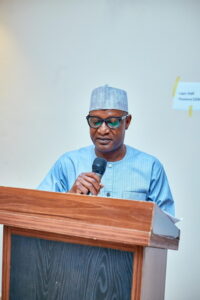
According to him, strengthening the relationship between the media and the health sector is essential for ensuring that credible information reaches communities and contributes to improved healthcare delivery across Kano State.
ISMPH Kano Director, Sabuwa Yahaya, said the roundtable was also intended to improve journalists’ ability to analyse health statistics, interpret performance reports and present evidence-based stories capable of influencing public discourse and policy decisions.
She noted that closer collaboration between media organisations and health institutions would enhance the quality of health communication and reduce the circulation of inaccurate information.
Read Also: Kano Health Journalists Form Unified Network
Declaring the event open, the Kano State Commissioner for Health, Dr. Abubakar Labaran Yusuf, underscored the responsibility of the media in promoting public health, urging journalists to adhere strictly to the principles of accuracy, professionalism and ethical reporting.

He said reports published by journalists significantly influence public perception, making it imperative for media practitioners to verify health information before publication.
The Commissioner stressed that disease outbreaks should be reported in ways that educate the public rather than create unnecessary panic, citing cholera as an example where emphasis should be placed on preventive measures and practical health advice.
Dr. Labaran also encouraged members of the Kano Health Journalism Network to sustain regular engagement on issues affecting reproductive, maternal, newborn, child and adolescent health, saying continuous dialogue would help dispel myths and counter misinformation.
He further called on journalists to maintain effective communication with health authorities to ensure emerging health issues are accurately clarified before publication.
The roundtable featured technical sessions and panel discussions on RMNCAH indicators, the Kano State Contributory Healthcare Management Agency (KACHMA), PHC-FAT scorecards and a detailed review of Integrated Supportive Supervision (ISS) data, with participants exploring ways of using evidence to produce impactful and solutions-oriented health reports.