
By Mariya Shuaibu
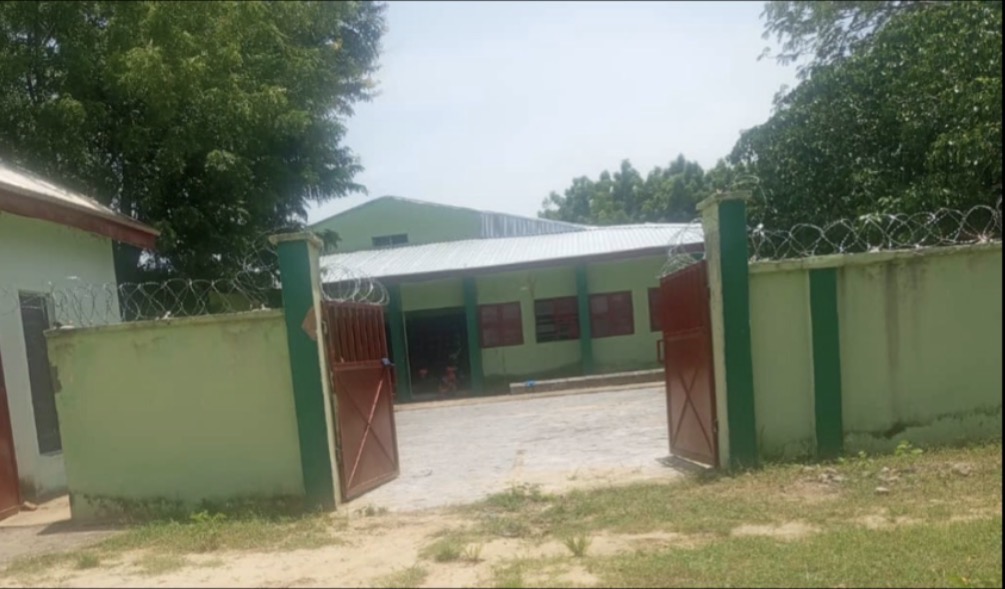
For women and families in rural communities, the value of a primary health centre is often measured by what happens when they walk through its doors. At Gidan Sarkin Noma Model Primary Health Centre in Gaya Local Government Area, electricity, beds, chairs and health workers are available, following an earlier local government renovation and ongoing work under the IMPACT Project. In this investigation, Mariya Shuaibu reports how the changes are being experienced by patients and what the continuing intervention means for the facility.
—————
GAYA, Kano — When Hadiza Salau takes her children to the health centre, she knows where to go
Mrs Salau, a mother of two, has used Gidan Sarkin Noma Model Primary Health Centre for her own antenatal care and for treatment whenever either of her children falls ill.
She said she is able to come to the facility, meet health workers and receive attention without having to look elsewhere for routine care.
“Whenever I come for antenatal care, they attend to us and provide the services we need. I also bring my children here whenever they are sick, and they attend to them,” Mrs Salau said.
Her experience is one example of how changes at the facility are being felt beyond the walls of the building.
At Gidan Sarkin Noma Model Primary Health Centre (MPHC) in Gaya Local Government Area of Kano State, electricity is available. Beds and chairs are also in place, while health workers attend to patients who come for care.
For a primary healthcare centre serving a rural community, those basic provisions can determine whether people can comfortably use the facility when they need it.
Kabiru Danladi, another patient, said he has also received attention whenever he visits the health centre.
His pregnant wife also uses the facility for antenatal care.
“Whenever I come here, they attend to me. My wife is pregnant and whenever she comes, the health workers are always here to check on her,” Mr Danladi said.
The accounts of Mrs Salau and Mr Danladi offer a simple measure of what a functioning primary health centre means to the people who use it: they can seek care within their community and find health workers available to attend to them.
But the improvements at Gidan Sarkin Noma did not happen through one intervention.
According to Abubakar Adamu Musa, the officer in charge of the facility, Gidan Sarkin Noma was first renovated under the administration of the Gaya Local Government Chairman, Mahmud Tajo.
In 2026, further renovation work began under the Immunisation Plus and Malaria Progress by Accelerating Coverage and Transforming Services (IMPACT) Project.
The work is still ongoing.
That history is important because not all the improvements currently visible at the facility should be attributed to the latest IMPACT intervention.
Instead, the changes reflect successive government interventions at the facility, with the earlier local government renovation followed by the ongoing IMPACT work.
Gidan Sarkin Noma was among the primary healthcare centres selected for upgrading under the IMPACT Project in Kano State.
In 2025, the Kano State Government announced plans to renovate 203 primary healthcare facilities under the project, with Gidan Sarkin Noma among the facilities listed in Gaya Local Government Area.
The Kano State Primary Health Care Management Board also said the IMPACT Project was undertaking the upgrading of 187 selected public PHCs across the state.
At the federal level, documents published by the Federal Ministry of Environment describe the IMPACT intervention as involving renovation and minor repairs to selected PHCs, including work on roofs, floors, walls, doors and windows across participating states.
The intervention at Gidan Sarkin Noma therefore forms part of a wider government effort to improve primary healthcare infrastructure.
But for the people who use the facility, the more important question is what those investments have changed in their everyday experience.
When basic things begin to matter
The first signs of change at Gidan Sarkin Noma are not necessarily dramatic.
They are the things that allow a health centre to function normally.These include: electricity, beds and chairs and health workers available to attend to patients.
For Mrs Salau and Mr Danladi, those conditions have translated into a place where they can seek care within their community.
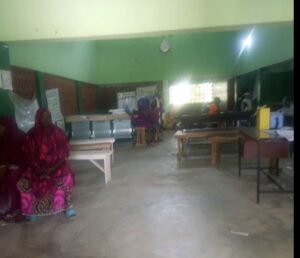
Inside view of the facility (PHOTO CREDIT: Mariya Shuaibu)
Their accounts do not mean that every healthcare need can be met at the facility.
They show that the centre is providing routine care to residents who use it and that the environment in which that care is provided has improved.
This is significant in a country where many primary healthcare facilities continue to struggle with basic infrastructure.
The National Primary Health Care Development Agency (NPHCDA) says its national PHC revitalisation programme is focused on making primary healthcare facilities functional and accessible through improvements in infrastructure, equipment, human resources, essential drugs and commodities. It says the programme is using government and partner resources, including IMPACT funding already disbursed at state level.
As of June 2025, the NPHCDA said 1,163 PHCs had been completed and fully revitalised, while another 2,774 were at different stages of revitalisation.
Gidan Sarkin Noma is one of the facilities undergoing that broader process.
What makes a PHC functional?
A renovated building, however, is only one part of a functional primary healthcare centre.
The NPHCDA’s Functional Level 2 requirements provide a useful benchmark.
The agency says a Level 2 facility should have everything needed for a pregnant woman to deliver safely around the clock. Its requirements include reliable primary power with backup solar power, WASH facilities, adequate skilled birth attendants, consulting rooms, functional toilets, inpatient wards, a delivery and labour ward, pharmacy and laboratory services, among other facilities.
The agency’s Priority PHC Initiative similarly describes a functional PHC as one with decent infrastructure, basic equipment and commodities, at least four skilled birth attendants, regular water and electricity and accommodation for health workers to support uninterrupted 24-hour services.
Gidan Sarkin Noma should therefore not be considered fully revitalised simply because renovation is taking place.
The more useful measure is whether the infrastructure is functional and whether it is supporting the services patients need. On that measure, the facility has some clear improvements.
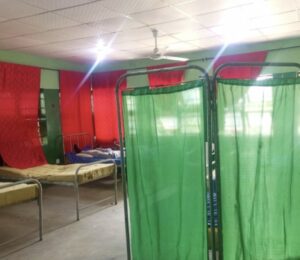 Inside view of the facility. (PHOTO CREDIT: Mariya Shuaibu)
Electricity is available, beds and chairs are in place, and health workers are present.
Patients interviewed for this report also said they are receiving care at the facility.
Electricity makes a difference
For a health centre, electricity is more than a convenience.
It supports lighting, communication, refrigeration and the use of medical equipment, among other routine activities.
The World Health Organisation (WHO) has described reliable electricity as a critical part of primary healthcare, particularly for services such as maternity care, immunisation and emergency treatment.
In April 2026, WHO reported that two Nigerian PHCs that received reliable solar power were able to provide more consistent immunisation, maternity and minor emergency services. The organisation said reliable power helped the facilities maintain uninterrupted services and improve conditions for patients and health workers.
The experience at Gidan Sarkin Noma is different in scale and intervention, but the principle is similar.
Dr Vincent Anayochukwu Ani, an energy expert with the Energy Commission of Nigeria who has researched sustainable electrification of Nigerian PHCs, has described energy as a prerequisite for running health facilities and improving healthcare delivery.
In a 2024 study on the sustainable electrification of a Nigerian PHC, Dr Ani examined the challenges created by unreliable electricity and proposed a solar-powered system to improve the facility’s energy supply.
At Gidan Sarkin Noma, the availability of electricity therefore represents one of the basic conditions supporting daily healthcare activities.
Its value lies not simply in having lights in the building, but in helping health workers operate in a more suitable environment when attending to patients.
Water and the everyday work of healthcare
Water is another basic requirement at the facility, but its story at Gidan Sarkin Noma is tied to the ongoing renovation.
The facility Incharge said the health centre had access to water before the current IMPACT intervention began.
However, the renovation work disrupted the existing water arrangement.
The facility is awaiting the completion of the work needed to restore the arrangement as the intervention progresses.
The compound is also awaiting the installation of interlocking stones, alongside other finishing work.
The situation means the current condition of the facility should be viewed as part of an ongoing intervention rather than its final state.
Water is particularly important in a healthcare setting because it supports cleaning, hygiene and other routine activities. The NPHCDA includes WASH facilities among the requirements for a Functional Level 2 PHC.
The fact that some of the facility’s existing arrangements were affected during construction also highlights an important part of revitalisation: improvements need to leave the facility more functional at the end of the process than it was before the work began.
More than a renovated building
The intervention at Gidan Sarkin Noma also illustrates why PHC revitalisation needs to go beyond repairing buildings.
The NPHCDA’s revitalisation programme includes infrastructure, equipment, human resources, essential commodities and services. Its stated goal is to make PHCs functional and accessible, particularly in underserved areas.
At Gidan Sarkin Noma, the physical facility is being improved while health workers continue to provide services.
That combination is what makes the intervention meaningful to patients.
Mrs Salau’s antenatal visits and her children’s treatment depend not simply on whether the building looks better, but on whether someone is available to attend to her, whether there is somewhere to examine and treat patients and whether the facility has basic utilities.
Mr Danladi’s experience with his pregnant wife similarly shows the importance of having health workers available when patients arrive.
The work is still continuing
The current intervention at Gidan Sarkin Noma is not complete.
Mr Musa said IMPACT took over renovation work at the facility in 2026, following the earlier local government intervention. Some finishing work is still being carried out, including the installation of interlocking stones in the compound.
The disruption to the facility’s previous water arrangement is also part of the unfinished work that needs to be addressed.
The continuing work makes maintenance and sustainability important.
Renovation can improve a facility, but the gains will only last if electricity and water remain functional, equipment is maintained, health workers remain available and essential supplies continue to reach the centre.
Those issues will ultimately determine whether the improvements at Gidan Sarkin Noma can be sustained.
A gradual change with a practical impact
Gidan Sarkin Noma does not tell the story of a health centre where every problem has disappeared. It tells a more modest and, perhaps, more useful story.
An earlier renovation by the Gaya Local Government administration was followed by another intervention under the IMPACT Project in 2026.
The facility now has electricity, beds and chairs, while health workers are available to attend to patients. Its water arrangement, which existed before the latest renovation, has been affected by the ongoing work and is awaiting completion of the necessary intervention.
For Mrs Salau, the changes mean being able to come for antenatal care and bring her children when they are ill.
For Mr Danladi, they mean receiving attention at the facility and knowing that his pregnant wife can go there and find health workers to check on her.
The changes may appear ordinary.
But for people whose first point of contact with the health system is a primary healthcare centre, those ordinary things are what make the difference between having a facility nearby and having one that can actually be used.
At Gidan Sarkin Noma, the renovation is still underway.
But the changes already visible and the experiences of the people using the facility, show that government investment in basic infrastructure can begin to bring primary healthcare closer to the people it is intended to serve.
This story was produced for the Follow the Money Investigative Programme and supported by the Africa Data Hub and Orodata Science.