
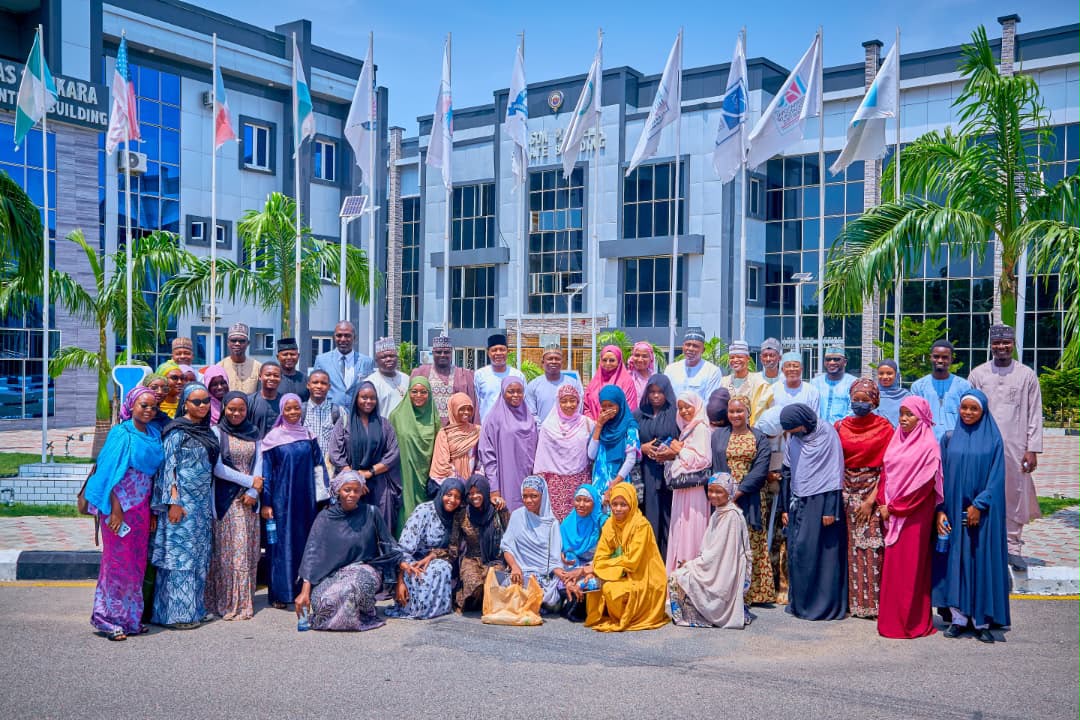
The Centre for Information Technology and Development (CITAD) and the Department of Mass Communication, Maryam Abacha American University of Nigeria (MAAUN), have raised the alarm over the growing spread of information disorder, urging students and digital media users to verify information before sharing it.
The organisations made the call on Monday at MAAUN during the commemoration of the 2026 International Day for Universal Access to Information.
The event, organised by CITAD in partnership with the Department of Mass Communication, was themed, “Upholding Information Integrity in the Digital Age: The Role of Access to Information in Addressing Information Disorder.”
The President of MAAUN, represented by the Vice President, Administration, Dr Habib Awais, said the theme was relevant to current national and global challenges, particularly during election campaigns and amid the spread of disinformation.
Awais urged students to deepen their understanding of information integrity and responsible engagement with information.
He said, “This programme provides an opportunity for students to learn, reflect and develop the knowledge required to navigate the complex information environment of today.”
The Head of the Department of Mass Communication, MAAUN, Mr Rabi’u Ya’u Sulaiman, described the theme as timely, noting that technology had changed the way people produced and consumed news.
“The theme, the role of access to information and addressing information disorder, can never be more timely.
“Looking at the way people are handling issues regarding news today, everybody has become a journalist, courtesy of technology,” he said.
Sulaiman said smartphones and other digital devices had enabled people to record, edit and distribute information without necessarily understanding the responsibilities attached to journalism.
“Everybody is taking advantage of that without necessarily understanding the role, laws, rules, regulations and ethics of journalism,” he said.
Read Also: CITAD to host Nigeria’s first community connectivity bootcamp
He urged students and other digital media users to understand the responsibilities involved in creating and sharing information.
Also, the Head of the Department of Mass Communication, Skyline University Kano, Dr Usman Bashir, called for sustained media and information literacy campaigns.
Bashir said misinformation and other forms of information disorder could lead people to make uninformed decisions with serious consequences.
He urged students to verify information before accepting or sharing it, particularly on social media.
In her presentation, Maryam Muhammad of the Department of Mass Communication, MAAUN, examined information disorder targeting women and girls.
She said misinformation and harmful information could affect women’s careers, psychological well-being and businesses.
Muhammad called for greater awareness and responsible information-sharing practices to protect women and girls from harmful digital content.
The Senior Programmes Officer, CITAD, Mr Sani Khamees, said the programme provided an opportunity for students and staff to discuss information integrity and access to information.
Khamees said access to information was a fundamental human right guaranteed under Article 19 of the International Covenant on Civil and Political Rights and recognised by UNESCO and the United Nations General Assembly.
“Access to information is far more than an abstract legal concept. It is the lifeblood of institutional accountability.
“It is what transforms an individual from a passive observer of governance into an active, empowered architect of national development,” he said.
Read Also: MAAUN Calls for FROs to Strengthen University Research
He said access to credible information was essential for informed decision-making, accountability and participation in public affairs.
Khamees urged students to become responsible users and producers of information by verifying claims, consulting credible sources and avoiding unverified content.
The International Day for Universal Access to Information is commemorated annually on September 28 to promote awareness of the importance of access to information in building informed, inclusive and accountable societies.