
By Hauwa Muhammad
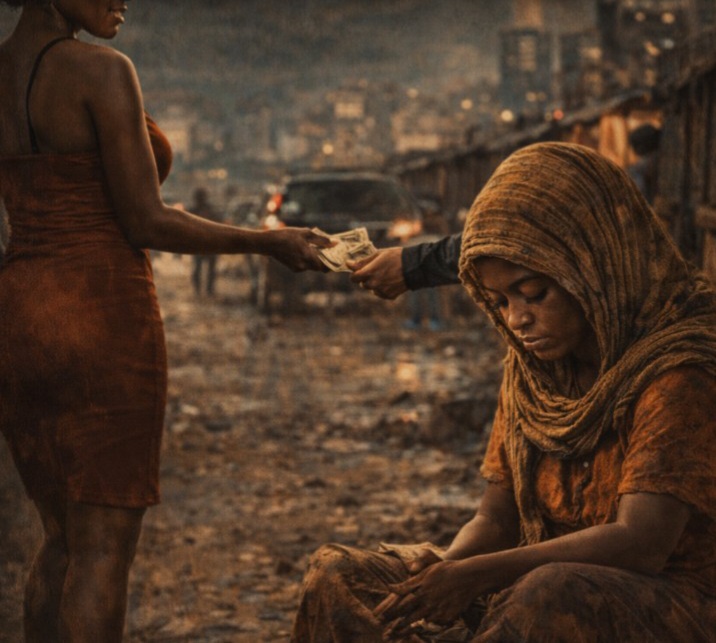
Across streets, campuses, cities, and quiet corners of our communities, a reality exists that is often whispered about but rarely confronted honestly. It is the story of women who are dressed and undressed for a price-women whose bodies become currency in a market driven by need, pressure, desire, and survival. This is not a story meant to shame, insult, or sensationalize. It is a story meant to be understood.
Read Also:Youth O’Clock Nigeria Trains 200 Uniformed Organizations in Gombe
When people say “a woman giving out,” the phrase is often used carelessly, without any thought for what lies beneath it. It reduces a complex human being to a single act, ignoring the circumstances that led her there. Behind the makeup, the confidence, or even the silence, there is usually a story-sometimes of poverty, broken homes, abuse, unemployment, peer pressure, or shattered dreams. For many, it is not a choice made lightly, but one made out of desperation.
Society plays a double game. On one hand, it condemns these women loudly, pointing fingers and attaching labels. On the other hand, it quietly sustains the very system it claims to despise. There would be no “price” if there were no buyers. There would be no market if there were no demand. Yet judgment is almost always reserved for the woman, while those who pay walk away unnoticed, uncriticized, and often respected.
Read Also: Kashere Community Applauds FUK Radio’s Impact as Station Marks 2 Years of Broadcasting
Being “dressed” speaks to appearance-looking attractive, presentable, and desirable. Being “undressed” speaks to vulnerability-physical, emotional, and psychological. When both are done for a price, it reflects how human dignity is reduced to a transaction. A woman’s body becomes a means to an end, not because she lacks value, but because society often fails to protect and empower her worth.
It is important to be clear: not every woman in such a situation sees herself as a victim, and not every story is the same. Some speak of agency, others of regret, and others of survival. What matters is not forcing a single narrative on all women, but recognizing that no one should be pushed into such choices because better options are unavailable.
Economic hardship remains a major factor. When education is incomplete, jobs are scarce, and support systems are weak, survival becomes urgent. In such moments, debates about morality sound distant compared to hunger, rent, school fees, or family responsibilities. The body becomes the last asset available when all other doors seem closed.
Ganduje Cancels Plan To Establish Independent Hisbah Group In Kano
Culture and media also play a role. In a world that constantly sells beauty, sex, and material success, young women are often taught-directly or indirectly-that their value lies in how desirable they are. When this message is repeated often enough, some begin to believe that exchanging beauty for money, favors, or protection is normal, even expected.
Yet the cost is often far higher than the price paid. Beyond physical risks, there are emotional scars-loss of self-worth, fear, secrecy, and isolation. Many women carry these burdens silently, smiling in public while struggling in private. Society rarely asks how they are coping; it only reacts when it wants to judge.
Addressing this issue requires more than condemnation. It requires empathy, responsibility, and action. We must ask difficult questions:
Why are so many women left with so few choices?
Why do we punish survival instead of fixing the systems that make survival so difficult?
Why is the conversation always about the woman and rarely about the environment that shaped her decision?
Read Also: FG expands irrigation to boost dry-season farming, food security in Kano
True change lies in education, economic empowerment, moral accountability for both genders, and support rather than rejection. It lies in creating a society where women can choose dignity without starvation, ambition without exploitation, and independence without selling themselves short.
“Dressed and undressed for a price” should not be a normal reality. A woman is more than what she wears, more than what she gives, and far more than what anyone is willing to pay. Until society learns to see her humanity before her actions, this cycle will continue-quietly, painfully, and unfairly.
This is not just a women’s issue. It is a human issue-and one we can no longer afford to ignore.