
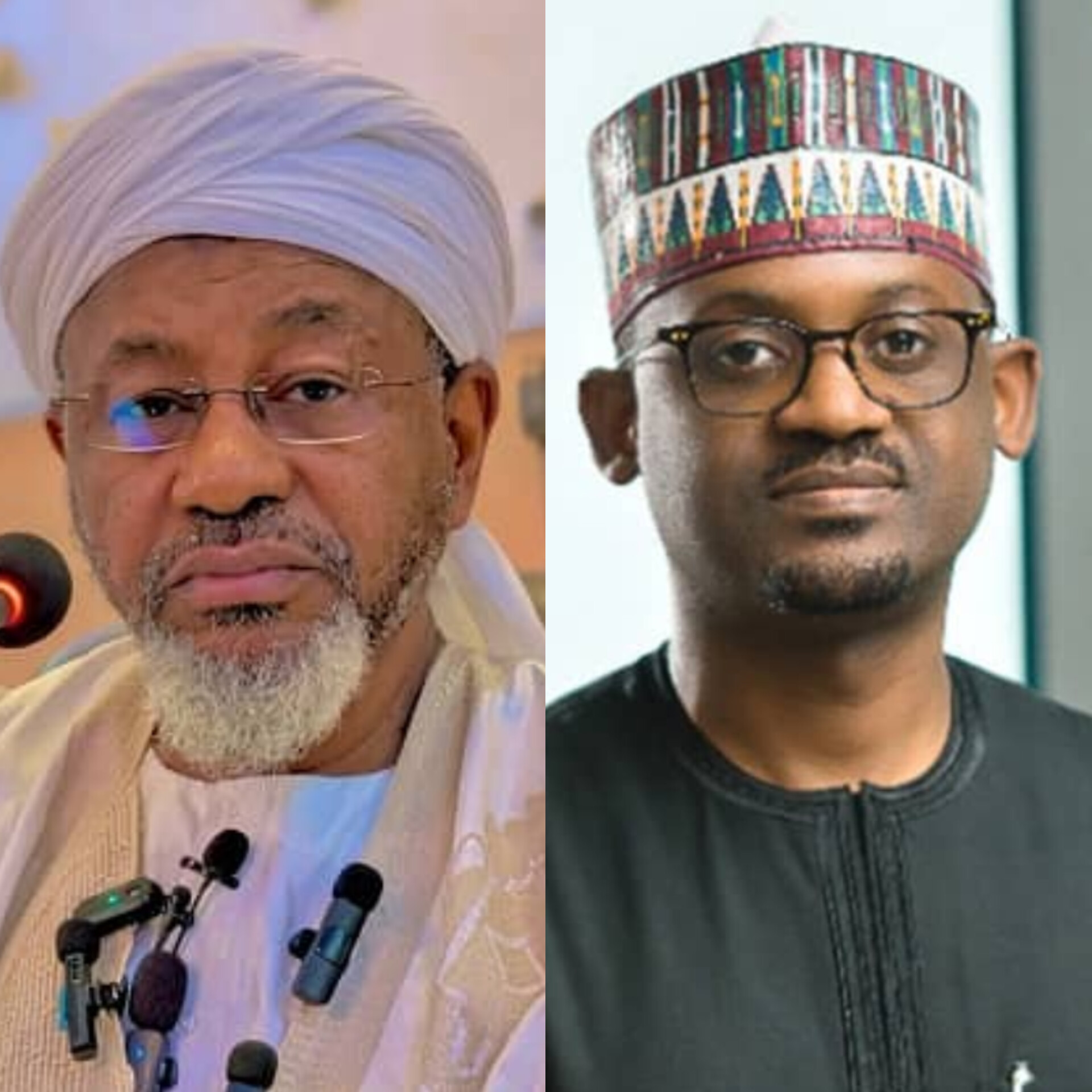
Farouk Gumel and Professor Bashir Umar Aliyu stand out among Nigerians whose competence and expertise earned them the trust of foreign institutions. In 2025, the Government of Botswana appointed Farouk Gumel as the inaugural Chairman of the Board of Botswana’s newly established sovereign wealth fund.
In 2026, the Bank of Ghana appointed Professor Bashir Umar Aliyu, the Chief Imam of Al-Furqan Mosque in Kano, as Chairman of its Non-Interest Financial Advisory Council (NIFAC).
Amazingly, two Nigerians. Two foreign appointments. One message: competence knows no borders.
Read Also: Kano Govt Set-up Committee to Strengthen Response to Diphtheria Outbreak
Following his appointment by Botswana’s President, Duma Boko, in 2025, Gumel became the inaugural Chairman of the Board of Botswana’s newly established sovereign wealth fund, tasked with helping manage the country’s financial resources and supporting its long-term economic development.
Before his appointment, Gumel had already built an impressive career in Nigeria and across the continent. He served as Chairman of the Nigeria Sovereign Investment Authority (NSIA), the institution responsible for managing Nigeria’s sovereign wealth.
The NSIA’s mandate includes investing for future generations, supporting infrastructure development and contributing to economic stabilisation.
Gumel was also a partner and Head of PwC’s West African Advisory and Consulting business.
He also served as Chairman of Union Bank from June 2022 to January 2024 and was also Chairman of WACOT during part of this period. His professional experience spans consulting, corporate finance advisory, investment and asset management.
It was this depth of experience and expertise that made him a credible choice for Botswana.
Botswana was not simply looking for someone capable of managing financial assets. It needed someone who understood how strategic investment could be deployed to support national development. In Gumel, it found an experienced professional with the competence required for that responsibility.
Similarly, Professor Bashir Umar Aliyu’s appointment by the Bank of Ghana was also rooted in expertise.
Read Also: Kano Govt Refutes Claims of 50 Child Deaths From Diphtheria
Professor Aliyu is a renowned Islamic scholar specialising in Hadith, Islamic jurisprudence and Islamic finance. He previously served as an adviser on Islamic banking to the Central Bank of Nigeria (CBN).
He is also a member of the Shari’ah Board of the Accounting and Auditing Organization for Islamic Financial Institutions (AAOIFI), a major international standard-setting organisation in Islamic finance.
These credentials helped establish him as a respected authority in the field and contributed to his appointment by the Bank of Ghana as Chairman of its Non-Interest Financial Advisory Council on 19 August 2026.
Despite Nigeria’s Corruption Stigma, the Two Nigerians Earn Trust Abroad
At a time when Nigeria’s reputation is often overshadowed by concerns about corruption, the appointments of these two Nigerians offer a powerful reminder: a country’s reputation and an individual’s reputation are not necessarily the same thing.
Nigeria may face serious institutional challenges, including corruption, but that does not automatically mean that Nigerian professionals are regarded as corrupt.
In the case of Gumel and Professor Aliyu, their appointments were not based on Nigeria’s global image. They were based on their individual records, expertise, experience and competence.
While Nigeria’s institutional reputation may sometimes take a back seat on the global stage, two of its citizens have been entrusted with important responsibilities of driving the economic and financial development of other countries.
Botswana and Ghana looked beyond Nigerian image as corrupt and saw competence.
What Do These Appointments Mean for Nigeria and Nigerians?
These appointments demonstrate that Nigeria possesses expertise that other countries need and are willing to trust.
Ironically, Nigeria can be criticised for corruption while simultaneously producing world-class academics, doctors, engineers, bankers, journalists, lawyers, entrepreneurs and religious scholars.
The lesson is therefore not that Nigeria has no problems. It clearly does.
Rather, it is that Nigeria’s problems should not be allowed to define every Nigerian.
The stories of Farouk Gumel and Professor Bashir Umar Aliyu remind us that, even when a nation carries a difficult reputation, individuals can still rise above that reputation through knowledge, integrity, experience and competence.