
By Adam Ismail Ahmad
Let me start by saying this clearly: there is nothing wrong with helping vulnerable people get married.
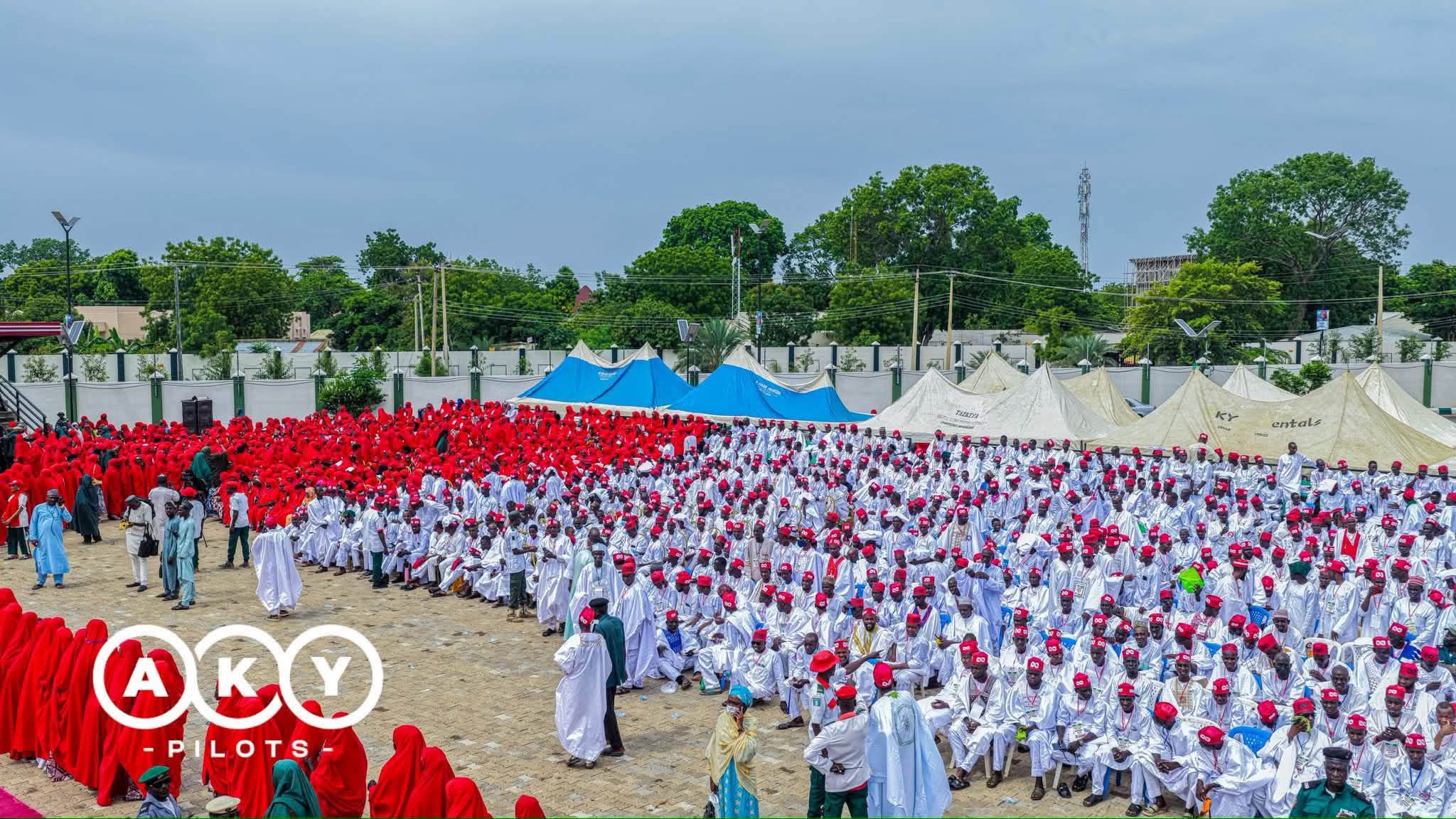
The 1,500 couples who recently benefited from Kano State’s mass wedding deserve our congratulations and best wishes. For widows, divorcees and other vulnerable people, government support can genuinely make a difference. Each bride reportedly received ₦200,000 as dowry and start-up capital, alongside household items.
But beyond the celebration, there is a bigger question we must have the courage to ask:
At a time when Kano is battling poverty, unemployment, insecurity, educational challenges and an increasingly difficult business environment, are we getting our priorities right?
Reports indicate that the Kano State Government spent ₦1.5 billion on the mass wedding programme involving 1,500 couples.
Again, the question is not whether the beneficiaries deserve support. They do.
The question is whether spending such a substantial amount on a mass wedding is the most effective way to address the deeper economic problems confronting millions of Kano residents.
Kano does not only have a marriage affordability problem.
Kano has a structural poverty problem.
We have thousands of young people struggling to find decent jobs. We have children who need better access to quality education. We have businesses struggling with the cost of operating. We have insecurity affecting livelihoods. We have industries that need a more favourable environment to survive, expand and employ more people.
So, if we genuinely want to reduce poverty in Kano, shouldn’t we be asking whether more resources should be directed towards the things that create sustainable income and opportunities?
Imagine what ₦1.5 billion strategically invested in skills acquisition, entrepreneurship, industrial infrastructure, education, agricultural processing, youth employment or small-business financing could potentially achieve.
Imagine a Kano where a young graduate does not have to spend years searching for employment.
Imagine a Kano where industries can operate efficiently, expand their businesses and employ thousands of young people.
Imagine a Kano where farmers can safely access their farms, produce more, process their products locally and sell them profitably.
Imagine a Kano where a child from a poor household can access quality education and acquire skills that can change the economic circumstances of an entire family.
That is the kind of poverty reduction we should be pursuing.
Social interventions are important. Cash assistance and support for vulnerable families have their place. The mass wedding itself can provide genuine relief to beneficiaries.
But social welfare should be a safety net, not a substitute for economic transformation.
Giving someone ₦200,000 can help them today.
But creating an environment where that person can build a sustainable business, access finance, employ others and earn a decent income can change their life for years.
That is the difference between managing poverty and addressing its root causes.
Kano has enormous human capital, a huge consumer market, agricultural potential, commercial history and a long tradition of entrepreneurship.
Read Also: Impact Assessment of Economic Policies: A National Security Imperative for Nigeria
Our government should therefore be asking:
Where are the new industries?
Where are the jobs?
How do we make Kano more attractive to investors?
How do we improve security so businesses can operate?
How do we keep our children in school?
How do we equip our young people with employable skills?
How do we turn Kano’s agricultural strength into a manufacturing and agro-processing economy?
These are the questions that should dominate our development conversation.
The mass wedding may bring happiness to 1,500 couples—and that is worth celebrating.
But if we truly want to lift millions of Kano residents out of poverty, we must think much bigger.
Education.
Security.
Employment.
Industrialisation.
Skills.
Agriculture.
Healthcare.
Infrastructure.
A favourable business environment.
These are not luxuries.
They are the foundations of sustainable poverty reduction.
Kano deserves a development agenda that does not merely make poverty more bearable, but tackles the conditions that reproduce poverty from one generation to another.
This is not about being against mass weddings. It is about asking whether we are investing enough in the things that can make mass weddings less necessary as a poverty intervention in the first place.
So, let me ask you:
If you had ₦1.5 billion to invest in Kano’s poverty-reduction strategy, where would you put it? Mass wedding, education, job creation, industrial development, security, skills acquisition, or something else?
Let’s hear your opinion.