
By Maryam Shuaibu
Lagos State may need about 40,000 additional doctors and a similar number of nurses to adequately meet the healthcare needs of its growing population, Governor Babajide Sanwo-Olu has said.
The governor also disclosed that the state’s health sector requires at least N100 billion above its current funding level, warning that shortages of personnel and shrinking donor support are placing increasing pressure on healthcare delivery.
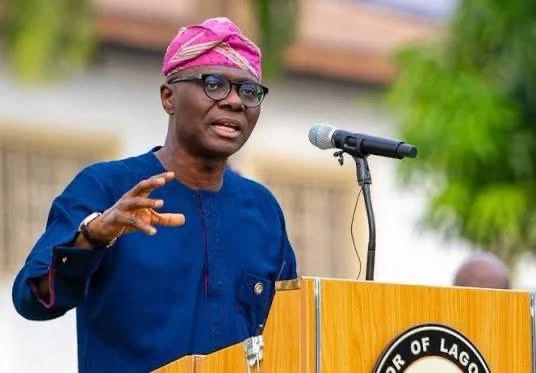
Sanwo-Olu made the disclosure on Thursday at the opening of the second Eko Health Convention at the Oriental Hotel, Victoria Island, Lagos.
He said Lagos currently has about 7,000 doctors, a workforce he considered grossly inadequate for the population and healthcare demands of the state.
“Lagos needs about 40,000 doctors to serve this population properly. We have about 7,000. We need roughly 40,000 more nurses. Every doctor in Lagos today is, in effect, doing the work of 10,” he said.
The governor identified human resources and funding as the two major gaps confronting the state’s health system, adding that the decline in donor financing for health programmes had created an additional challenge.
“The second gap is money. There is a shortfall of at least N100 billion between what our health budget provides and what this system genuinely requires.
“Donor financing, which supported much of our disease control for two decades, is contracting sharply and will not return in its old form,” he said.
Lagos moves to tackle health workforce shortage
The governor said his administration had begun efforts to increase the number of health professionals in the state through recruitment, improved welfare and accommodation, as well as plans to establish a University of Medicine and Health Sciences.
According to him, the state recently opened recruitment for clinical personnel across its 29 secondary healthcare facilities.
“We have recruited aggressively, and last month opened clinical recruitment across all 29 of our secondary facilities.We have built accommodation for health workers. We are improving conditions to slow the departures and, increasingly, to attract colleagues back,” he said.
The challenge facing Lagos mirrors a wider health workforce problem in Nigeria, where the number and distribution of doctors, nurses and other health professionals remain below the level required to meet population needs.
The World Health Organisation’s latest available country data puts Nigeria’s density of medical doctors at 3.86 per 10,000 people, while nursing and midwifery personnel stood at 16.5 per 10,000 in 2022.
A 2025 Nigeria Health System and Services Profile published through the Africa Health Observatory Platform also identified staff shortages, uneven distribution, poor remuneration and working conditions, as well as migration, as major challenges affecting the country’s health workforce.
The WHO has similarly warned that international migration of health professionals can worsen shortages in countries already struggling to retain skilled workers. Nigeria was among the countries placed on the WHO’s 2023 Health Workforce Support and Safeguards List because of its severe workforce needs.
For Lagos, Sanwo-Olu said the state was attempting to address the problem not only by recruiting more workers but also by creating conditions that could encourage professionals to remain in the public health system.
The state’s health workforce challenge is particularly significant given its role as Nigeria’s most populous state and one of the country’s major centres for specialist and tertiary healthcare.
Ilera Eko enrolment crosses 1.5 million
Beyond staffing and funding, Sanwo-Olu highlighted the expansion of health insurance as another part of the state’s strategy to improve access to healthcare and reduce the financial burden on residents.
He said enrolment in Ilera Eko, the Lagos State health insurance scheme, had reached 1,502,994 residents as of the end of May 2026, with women accounting for more than half of the enrollees.
“As at the end of May this year, the figure stood at 1,502,994. More than half are women.And utilisation is rising, which tells us something important: that coverage is translating into actual care and not merely into cards in wallets.”
The governor also disclosed that the Lagos State Health Management Agency’s Assistance in Distress programme had saved 18 lives since its launch in March by providing emergency care to patients irrespective of their ability to pay.
The state is also deploying digital technology through the Lagos Smart Health Information Platform, which is intended to allow healthcare facilities to access patients’ medical records, strengthen disease surveillance and support evidence-based planning.
Sanwo-Olu said the state was further exploring artificial intelligence and other digital tools to improve diagnosis, medical imaging and healthcare delivery.
The push for stronger health financing and insurance comes against a broader challenge of high out-of-pocket healthcare spending in Nigeria, where inadequate public funding and limited insurance coverage have continued to affect access to care.
The governor said the administration’s focus was therefore not only on expanding services but on building institutions that could continue to function beyond his tenure.
He said initiatives including Ilera Eko, the state’s health districts and its digital health infrastructure were designed to create systems that would remain in place after the current administration.
However, the scale of the workforce gap highlighted by the governor suggests that expanding infrastructure and digital systems will need to be matched by sustained investment in the doctors, nurses and other health professionals required to keep the system running.