
By Na’ima Umar Musa
The visible side of public office tells only part of the story; its truest burdens are carried beyond the public gaze.
Leadership is often judged by what the public sees—official engagements, policy pronouncements, and landmark projects. Yet its most demanding responsibilities rarely unfold beneath the flash of cameras or the glare of public attention.
Much of leadership is invisible. It lives in the unrecorded hours, the unscheduled conversations, the quiet hospital visits, the homes draped in mourning, the endless stream of petitions, the listening, the reassuring, the comforting, and the burden of making decisions whose consequences extend far beyond a single day.
There is a labour that accompanies public office which no statistic can quantify and no photograph can fully preserve. It is the steady surrender of personal time, private convenience, and often personal peace in service of others.
The public sees the itinerary; only those who live it know where its true weight resides.
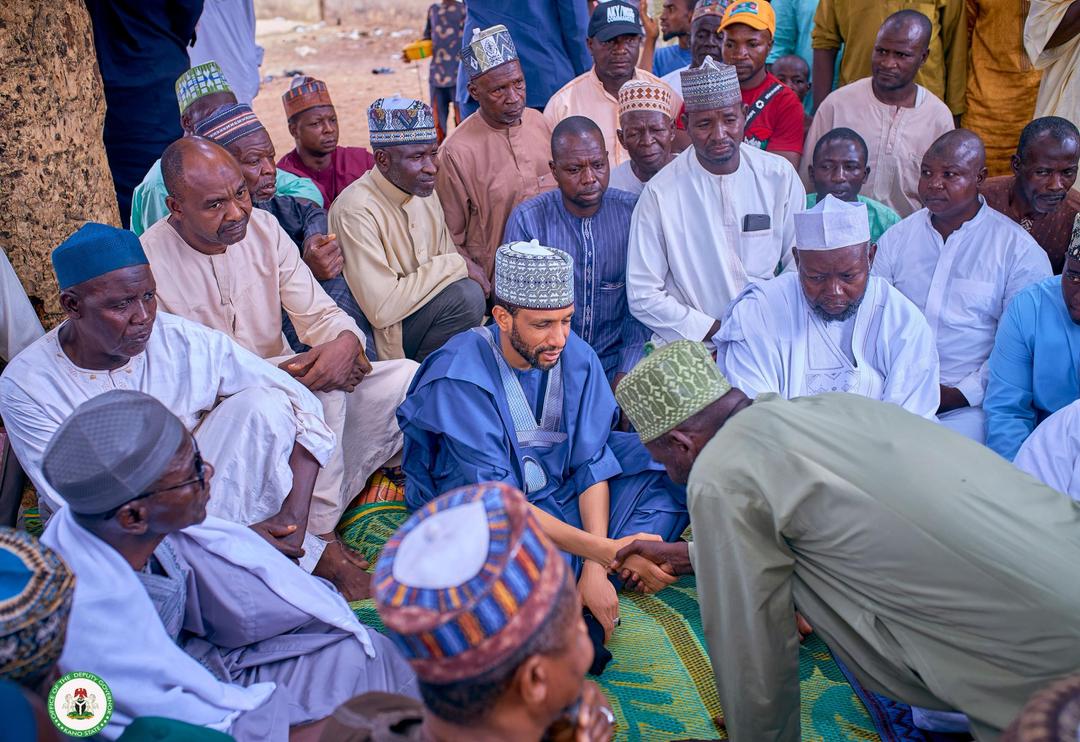
On Sunday, Kano State Deputy Governor, Alhaji Murtala Sule Garo, returned to Garo in Kabo Local Government Area to condole with the family of the late Alhaji Auwalu Usaini Garo following the tragic loss of his son, Aliyu (Haidar), and with the family of the late Malam Rabo Shafiu Kofar Fada. He also visited Kabo town to sympathise with the family of the late Alhaji Garba Zangon Kabo before proceeding to Dakata Kawaji in Nasarawa Local Government Area to offer condolences to the family of the late Hajiya Sa’adatu Muhammad.
To an observer, the day might have appeared to be little more than a succession of official engagements. In reality, it reflected a quieter dimension of public service, one that seldom commands headlines but leaves an enduring impression on those who experience it.
There were no projects to unveil and no ceremonial milestones to celebrate. There were bereaved families, whispered prayers, unhurried conversations, and moments for which protocol offers no script and public office no exemption.
More often than not, leadership is written in the margins, in hospital corridors, homes in mourning, private consultations, modest gatherings, and the countless ordinary moments where public duty quietly takes precedence over personal comfort. It is in these unrecorded hours, rather than the celebrated ones, that the weight of responsibility is most truthfully borne.
Long after speeches fade and photographs are archived, what endures is the quiet consistency of presence: the willingness to listen, to console, to receive, to respond, and to remain accessible even when exhaustion would justify retreat.
By the close of the day, the official record would reflect little more than a series of condolence visits across Garo, Kabo, and Dakata Kawaji. The record would be accurate, but incomplete.
It would preserve the route, but not the weight of the journey; the destinations, but not the sorrow that awaited at each stop.
Archives remember movement.
People remember presence.