
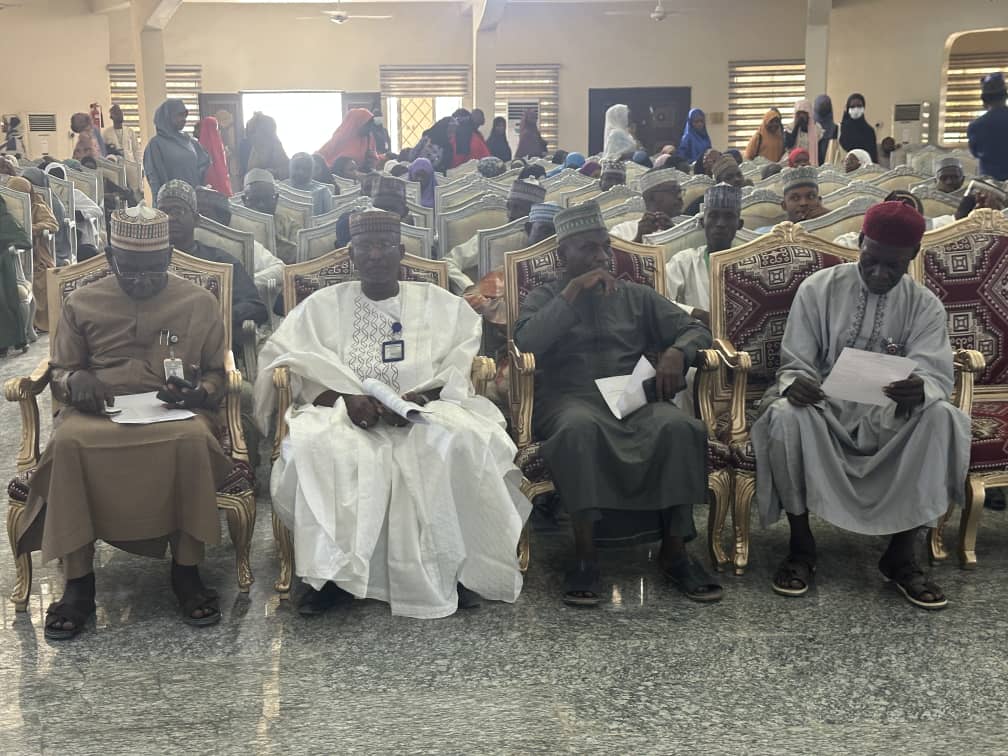
The Khalifa Isyaku Rabiu University, Kano (KHAIRUN) has hosted its maiden Symposium on Indigenous Knowledge Systems, organised by the university’s Centre for Indigenous Knowledge Systems (KCIKS).
Speaking at the event on Tuesday, the Vice-Chancellor, Prof. Abdulrashid Garba, said the symposium was designed to sensitize the Kano community to the richness of indigenous knowledge that remains largely untapped.
Read Also: KHAIRUN celebrates Maulud, urges emulation of Prophet Muhammad (PBUH)’s character
“We have a very rich knowledge system in this community,” he said. “If we are able to link that indigenous knowledge with the orthodox system, it will promote innovation and growth in our society.”
The Vice-Chancellor explained that the university aims to bridge the gap between conventional academic learning and traditional knowledge practices.
“We hope to see how useful indigenous knowledge can be developed into the mainstream curriculum. Our goal is for students of this university to graduate with distinct skills,” he said.
Read Also:World AIDS Day: CSADI Calls for Sustained Support for Vulnerable Children, Appeals for End to Stigma
Prof. Garba added that knowledge whether traditional or modern remains powerful. He noted that many valuable practices exist in the hands of traditional herbalists and practitioners who have never passed through formal education.
“What the university intends to do is to liaise with traditional knowledge holders for better understanding. That is why the Centre invited them to share their knowledge with us, so that we can formalize it and teach it in class. At this university, skills acquisition is a priority,” he said.
Also speaking, the Director of the Centre, Prof. Auwal Muhammad Ibrahim, said the mission of KCIKS is to promote the utilization and preservation of indigenous knowledge systems that are at risk of extinction.
“When we talk about indigenous knowledge systems, we refer to traditional knowledge that is already being lost,” he said.
“Many of these systems exist but are underutilized. Our target is to promote them, research them, and explore ways to integrate them meaningfully.”
He added that the Centre is seeking international funding to support programmes that will strengthen traditional practices and empower local knowledge holders.
In his remarks, Mallam Yakubu Mai Gida Kachako, a traditional herbalist, expressed readiness to partner with the Centre for the benefit of students and the community.
He said traditional medicine has existed long before the arrival of Western education.
“People have used traditional medicine for centuries. But with the coming of Western education, many abandoned us and no longer value our knowledge,” he said. “With the establishment of this Centre, we are ready to support and partner with the university so that students can learn from us.”
Solacebase reports that the symposium, themed “Promoting Traditional Knowledge Systems in Kano for Innovation and Economic Growth,” brought together scholars, practitioners, students, and other stakeholders to discuss, promote, and preserve indigenous knowledge systems as tools for innovation, economic growth, and sustainable development.